Last updated November 20, 2026
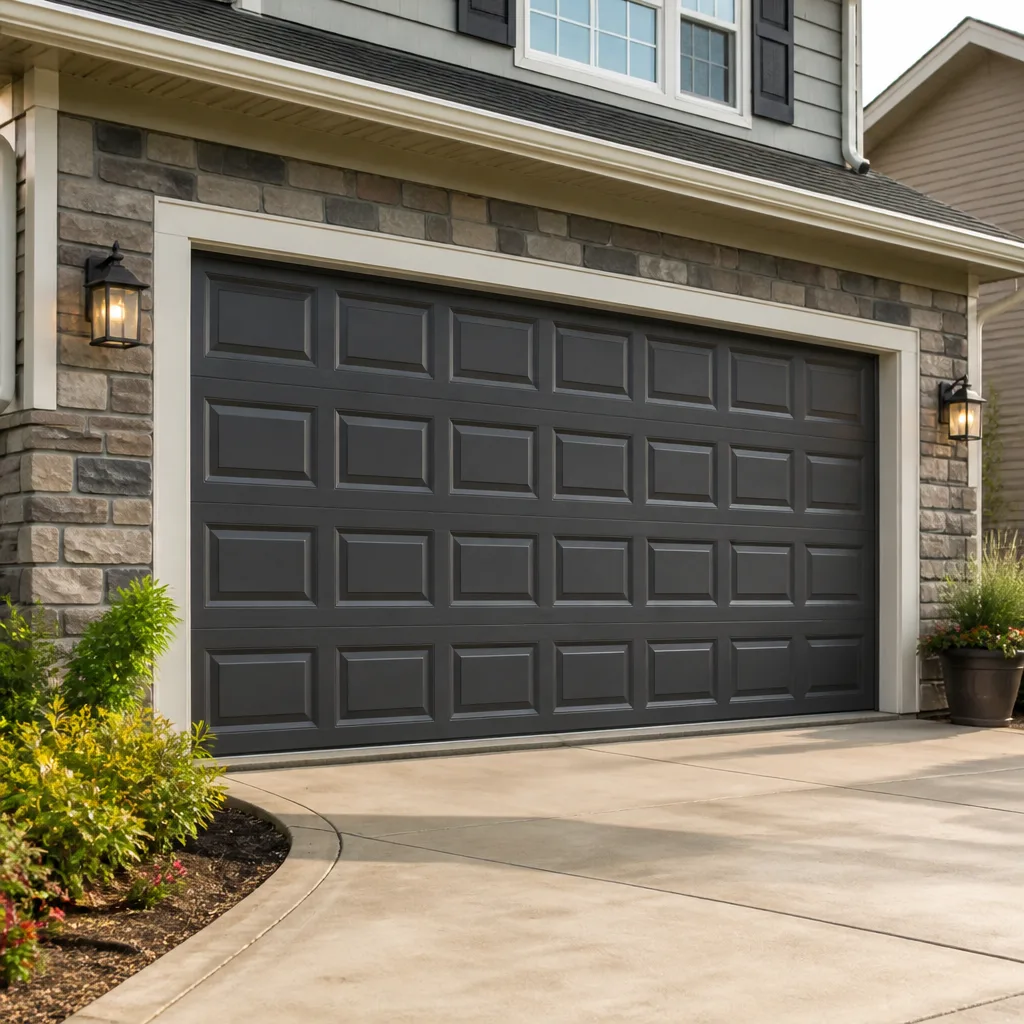 Raised-panel steel
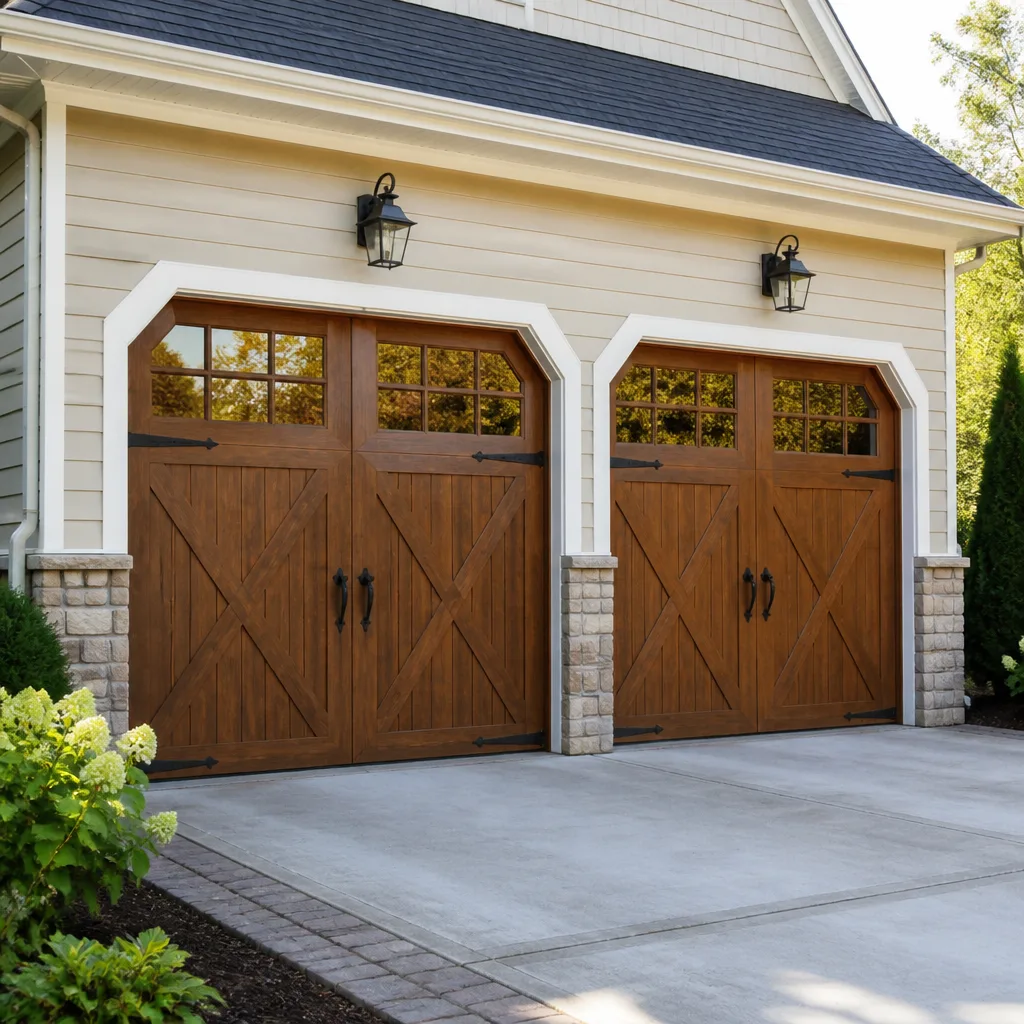 Carriage house
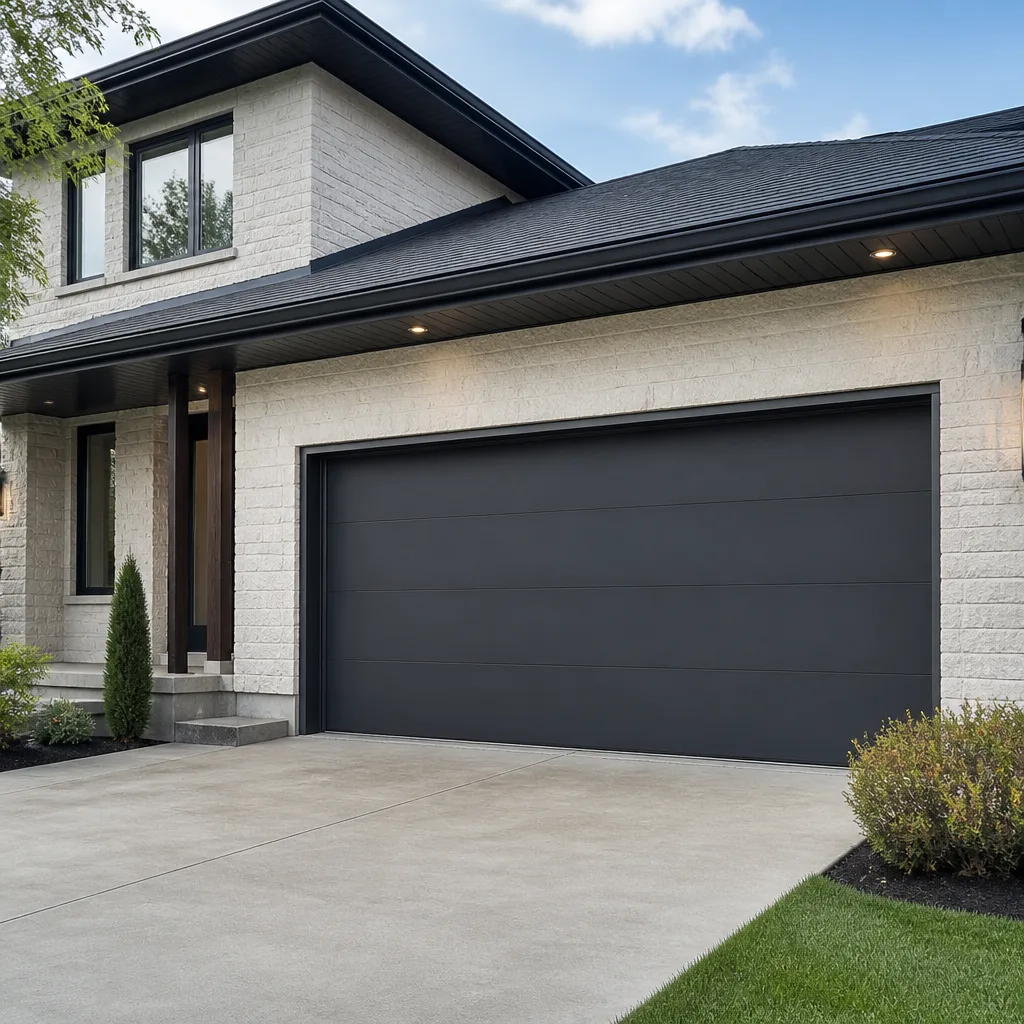 Modern flush
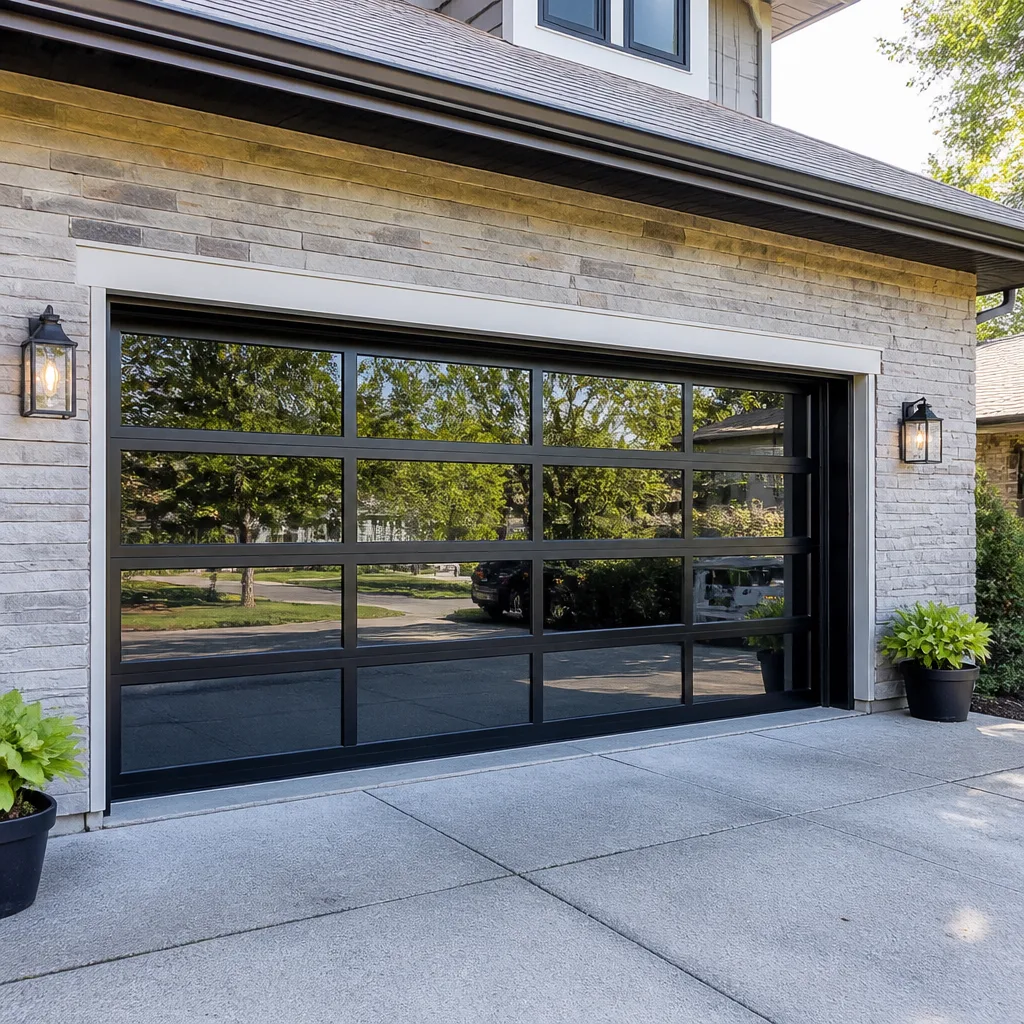 Full-view glass
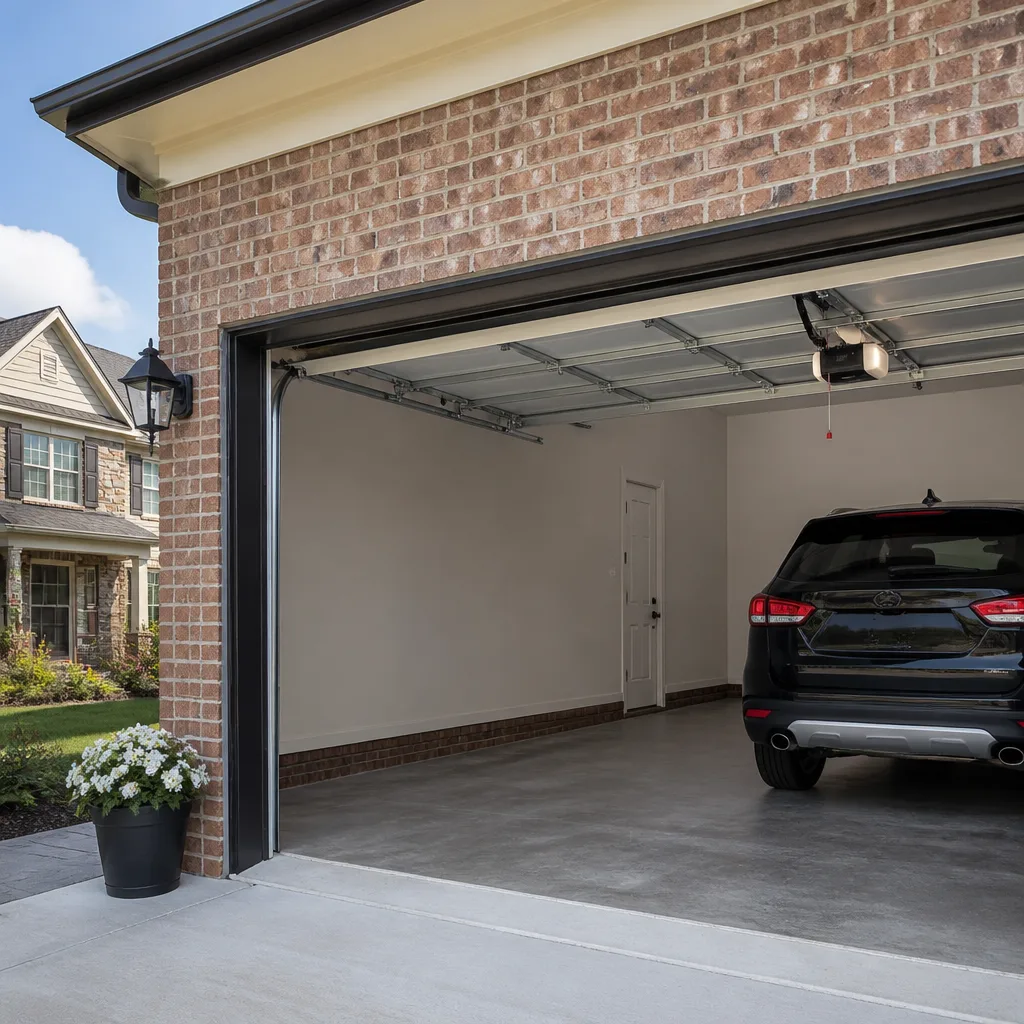 LiftMaster openers
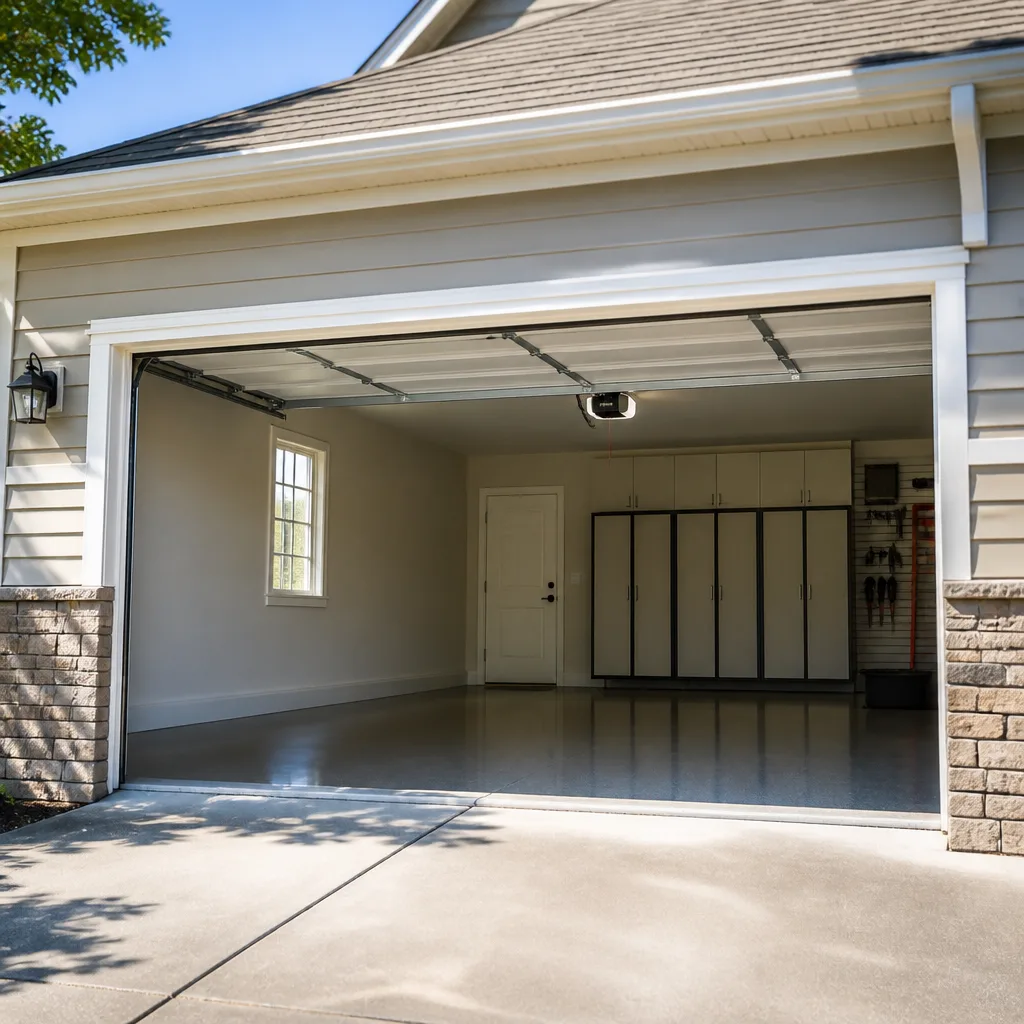 Chamberlain openers
Full 25-point door and opener safety check with every visit - springs, cables, rollers, tracks, and your LiftMaster or Chamberlain opener included
You get a price before we start. It does not change when the pro arrives.
Get your free estimateGarage Door Warning Signs: A Lakewood Ranch Homeowner’s Reference Guide
A garage door that hesitates for half a second before it moves isn’t “getting old.” It’s showing you a specific symptom that points to one of three likely causes – and one of them will strand your car inside the garage if you ignore it for another month. Most garage door failures we see in Lakewood Ranch don’t come out of nowhere. They announce themselves first, through a sound, a movement, or a visual cue that most homeowners have no reason to recognize. This guide names those signs plainly, tells you which ones are normal wear and which ones mean a component is running out of time, and helps you decide what to fix yourself versus when to call a specialist.
Quick Answer
In a Lakewood Ranch garage, the warning signs worth acting on are: a door that opens unevenly, a loud pop or bang from above the door, a grinding noise during travel, a spring with a visible gap in the coil, an opener that only fails in the afternoon heat, and a bottom seal that leaves a gap you can see daylight through. Two of these you can check and adjust yourself. The rest point to high-tension springs, cables, or opener components that a trained garage door technician should handle.
Styles & brands we work with
- Raised-panel steel
- Carriage house
- Modern flush
- Full-view glass
- LiftMaster openers
- Chamberlain openers
Table of Contents
- What the Sound Tells You: Grinding vs. Popping
- How to Read a Spring: The Gap That Means Broken
- Why an Uneven Door Is Usually a Cable Problem
- Opener Warning Signs Specific to Florida Heat
- The Floor Gap Test: Seal vs. Warped Panel
- The Full Visual Walk-Around: What to Look For
- Common Mistakes to Avoid
- When to Call a Professional
What the Sound Tells You: Grinding vs. Popping
A grinding noise and a popping noise come from completely different components, and they carry very different repair costs. Homeowners often lump them together as “the door is making a weird noise,” which is why the wrong part gets replaced or the right part gets ignored too long. Listen specifically next time you run the door. The sound is diagnostic.
Grinding is usually a friction problem. It’s metal dragging on metal or a roller that has stopped rolling and is now skidding along the track. In our experience across Lakewood Ranch, grinding most often traces to one of three things:
- Dry or worn rollers. Nylon rollers wear down and steel rollers dry out. A roller that no longer turns creates a scraping sound through the whole travel of the door.
- A bent or misaligned track. Even a slight inward bend pinches the roller path and produces a rhythmic grind.
- Loose hinges or a dry torsion shaft. Less common, but a hinge that has worked loose can vibrate against the panel and grind.
Grinding is usually the cheaper of the two problems. It’s a maintenance and alignment issue, and it tends to worsen gradually rather than fail all at once.
Popping is different, and it deserves more attention. A sharp pop or bang from directly above the door – especially the first time you run it after the door has sat closed for a while – is often a torsion spring under load. A spring that’s about to fail can pop as the coils bind and release. Sometimes a popping door turns out to be a cable that has jumped its drum, which is also serious. If you hear popping, stop running the door and read the next section before you do anything else. We handle this exact diagnosis under our garage door spring repair service, but the first step is yours: don’t keep cycling the door to “see if it does it again.”
How to Read a Spring: The Gap That Means Broken
You can tell whether a torsion spring is intact, broken, or on its way out with a visual inspection from the floor – no tools, no ladder, no touching. Here’s how a torsion spring looks when healthy versus failing.
A healthy torsion spring is one continuous coil of tightly wound steel with a uniform gap between every loop. The space between coils should be even from one end to the other. The spring should look whole.
A broken torsion spring shows a clear gap of one to two inches somewhere in the middle of the coil, where the wire has separated. You don’t need to look closely to spot it. The spring literally comes apart, and the door will feel extremely heavy if you try to lift it by hand.
A torsion spring about to break is harder to read. Look for these signs:
- Coils that are no longer evenly spaced – stretched or compressed sections where the wire has fatigued.
- Visible rust or dark discoloration concentrated in one area of the coil.
- A door that has gotten progressively heavier to lift manually over recent weeks.
- A popping or twanging sound at the start of the door’s travel.
Extension springs (the ones that run parallel to the horizontal tracks, often with a safety cable threaded through them) fail differently. They tend to stretch first, then break with a sharp bang. Older homes in Lakewood Ranch sometimes still have uncabled extension springs; those are the ones to inspect most carefully.
One thing we want to be clear about: do not attempt to adjust, wind, or remove a torsion spring yourself. These springs store enormous energy, and releasing that energy incorrectly can cause serious injury. A snapped spring looks like a simple broken wire; it doesn’t feel like one. If you’ve spotted the gap, call a technician trained on torsion and extension systems, and leave the door closed until they arrive.
Why an Uneven Door Is Usually a Cable Problem
When a garage door rises with one side visibly higher than the other, most homeowners assume the track is bent. In our experience, that’s rarely the cause. The most common culprit is a cable.
Each side of a garage door runs on its own lift cable, wound around a drum at the top of the door. If one cable has slipped its drum, stretched, frayed, or come loose, that side of the door loses lifting force and lags behind. The result is a door that tilts as it opens. It’s a cable issue, not a track issue, and the distinction matters because the repair and the diagnosis are completely different.
Here’s why it pays to know the difference:
- A cable problem will get worse. A frayed or slipping cable can eventually snap, and when it does, one side of the door drops. That’s the moment the door usually comes off-track entirely.
- A misdiagnosed track gets bent. Homeowners who assume “track” and try to bend it back often make the door worse. The tracks get out of alignment, and now there’s a second problem.
- Cost is very different. A track adjustment is a minor fix. A cable replacement plus a door re-hang after a drop is a more involved job.
If you see daylight under one side of the door while the other side sits flush, or if the door visibly angles as it rises, stop running it. A cable that’s failing is a garage door safety issue, not just a cosmetic annoyance. You don’t need a special tool to spot it – the door tells you. You do need a technician to fix it, because cables are under high tension and need to be replaced as a matched pair, not one at a time.
Opener Warning Signs Specific to Florida Heat
A motor that runs fine in the cool of the morning but refuses to move the door by mid-afternoon is not usually a dead motor. It’s a motor that’s overheating in the Florida heat, and the garage is where that heat concentrates. This is one of the most commonly misdiagnosed problems in Lakewood Ranch garages. Homeowners replace a perfectly functional opener because it “fails every afternoon.”
Garage openers protect themselves with a thermal cutout. When the motor’s internal temperature gets too high, it stops, waits to cool down, and then runs again. On a hot day, in an unconditioned garage, a door that’s already straining – because of a worn roller, a slightly misaligned track, or a spring that’s lost some tension – pushes the motor just past that trip point. The motor did its job. The real problem is what’s making it work so hard.
Look for these heat-cycling signs on your opener:
- The door runs fine in the morning and fails in midafternoon when the garage is hottest.
- The opener stops midway and beeps, then works again after 10-20 minutes.
- It happens more often as summer deepens and less in cooler months.
- The opener housing feels very warm to the touch after a failed cycle.
If those sound familiar, the fix usually isn’t a new opener. It’s relieving the load the opener is fighting – servicing rollers, aligning the track, or addressing spring tension. Our garage door opener repair team checks the whole system, not just the motor, because the motor is rarely the problem in heat-cycling situations. If the unit does need replacing, we work on the major brands already in Lakewood Ranch garages – LiftMaster, Chamberlain, and Craftsman in particular – so you’re not starting over with an unfamiliar system.
The Floor Gap Test: Seal vs. Warped Panel
Walk out to your closed garage door at dusk and look along the bottom edge. If you see a ribbon of daylight under the door, that gap has one of two causes, and you can tell which one without calling anyone. The test takes about a minute.
Step 1: Push gently. Standing on the inside of the garage, push the door at the middle of the bottom panel, then at each corner. If the door moves up slightly and the gap closes, you have a seal or travel adjustment problem.
Step 2: Check the gap shape. Look at the daylight pattern. A gap that runs the entire width of the door at an even height is a seal issue. A gap that’s wider in one spot and narrower elsewhere, or that has a visible bow, is more likely a panel problem.
Step 3: Check the bottom seal for damage. Look at the rubber strip along the bottom. Is it cracked, hardened, missing chunks, or sitting slightly out of its channel? A brittle, cracked seal is a simple replacement.
Here’s why the distinction matters: a seal replacement is a straightforward, low-cost repair. A warped bottom panel is a bigger issue. It might be fixed with panel adjustment or hinge realignment, or the panel might need to be replaced – which means matching the brand and manufacturer, not just finding “a panel that fits.” This is where brand compatibility matters. If yours is a Clopay, Amarr, or Raynor door, a generic replacement panel won’t match. We stock access to those manufacturers’ panels specifically because a mismatched panel is a visible, permanent reminder.
One more thing: a door that doesn’t close flush against the floor is also a security issue. An even daylight ribbon is an open invitation to anything that crawls or blows in. Fixing a bottom seal is inexpensive; leaving it alone can cost you in more ways than one.
The Full Visual Walk-Around: What to Look For
Once a month, run through this checklist. It takes five minutes and gives you a snapshot of your door’s current condition. This is the same walk-around our technicians run before any repair.
- Springs. Look up. Even coil spacing? Any visible gap? Rust or discoloration? If yes to any of these, call before the door runs again.
- Cables. Look at both sides near the drums. Any frayed strands, kinks, or loose cable dangling? Straight cables under even tension are healthy.
- Rollers. Do the rollers turn smoothly as you move the door? Any wobble, cracking, or flat spots?
- Hinges. Look for bent hinges, worn metal, or screws that have pulled loose from the panel.
- Tracks. Run your hand lightly along the inside of each track. Any dents, bends, or debris? Tracks should be straight, clean, and clear.
- Bottom seal. Intact, flexible, evenly seated? Any daylight under the door?
- Weatherstripping (the frame sides and top). Look for cracks, gaps, or pieces pulling away.
- Balance test. With the door closed, pull the emergency release, then lift the door halfway by hand. It should hold position on its own. If it drops or rises, the springs need attention.
- Opener behavior. Does the door reverse when it hits an obstruction? Run the sensor test – a simple wave of your hand across the safety beam should trip the reverse.
If you’ve done the walk-around and something doesn’t look right, having the door looked at is usually the better move than continuing to run it. The more expensive a door problem gets, the more it maps to continuing to run the door while a symptom is present. That’s the pattern we see most often in Lakewood Ranch.
What a Broken Spring Actually Costs (and Why the Quote Shouldn’t Change)
Spring repair in the Lakewood Ranch area typically runs $180-$340 for a single torsion spring, and a matched pair is replaced together almost always because matching springs wear together – so a pair generally runs about twice that. The point of this section isn’t the exact number. It’s that the price should be written down and agreed before any work starts, so there’s no invoice bigger than the quote when the work is done.
- Single torsion spring replacement: typically $180-$340, one spring.
- Matched pair of torsion springs: about twice the single-spring range, both replaced together.
- Extension spring replacement: similar ballpark, priced per spring.
- Cable replacement (matched pair): typically $150-$300, both sides together.
- Roller replacement (set): typically $100-$200, depending on count and roller type.
- Opener diagnosis and repair: varies by component – a written estimate comes before the work.
If you’ve seen a spring with a gap, or heard the pop, don’t wait for the price. Call for a free estimate and ask for the written number before anyone starts. The written estimate sets the final price.
Why Brand Knowledge Matters When Something Fails
Most garage door problems aren’t brand-specific – a broken spring is a broken spring. But diagnosing and fixing them correctly often is. This is where working on the manufacturer already in your garage makes a real difference.
We work on LiftMaster, Chamberlain, Clopay, Amarr, Wayne Dalton, and Craftsman systems, among others, and our technicians arrive familiar with the specific tensioning system, opener programming, or panel construction each brand uses. That matters most in three situations:
- Spring replacement. Torsion systems vary in wire gauge and cycle rating between manufacturers. Getting the wrong spring means a new failure weeks later.
- Opener service. LiftMaster and Chamberlain openers have specific safety-reverse tolerances that need to be set correctly after any repair.
- Panel or section replacement. Clopay, Amarr, and Raynor panels have to match the existing door. We draw from the full roster rather than pushing one house brand.
If your door needs work and you’re not sure of the brand, that’s fine – we’ll identify it from the door, the opener, or the labels inside the housing.
See the difference
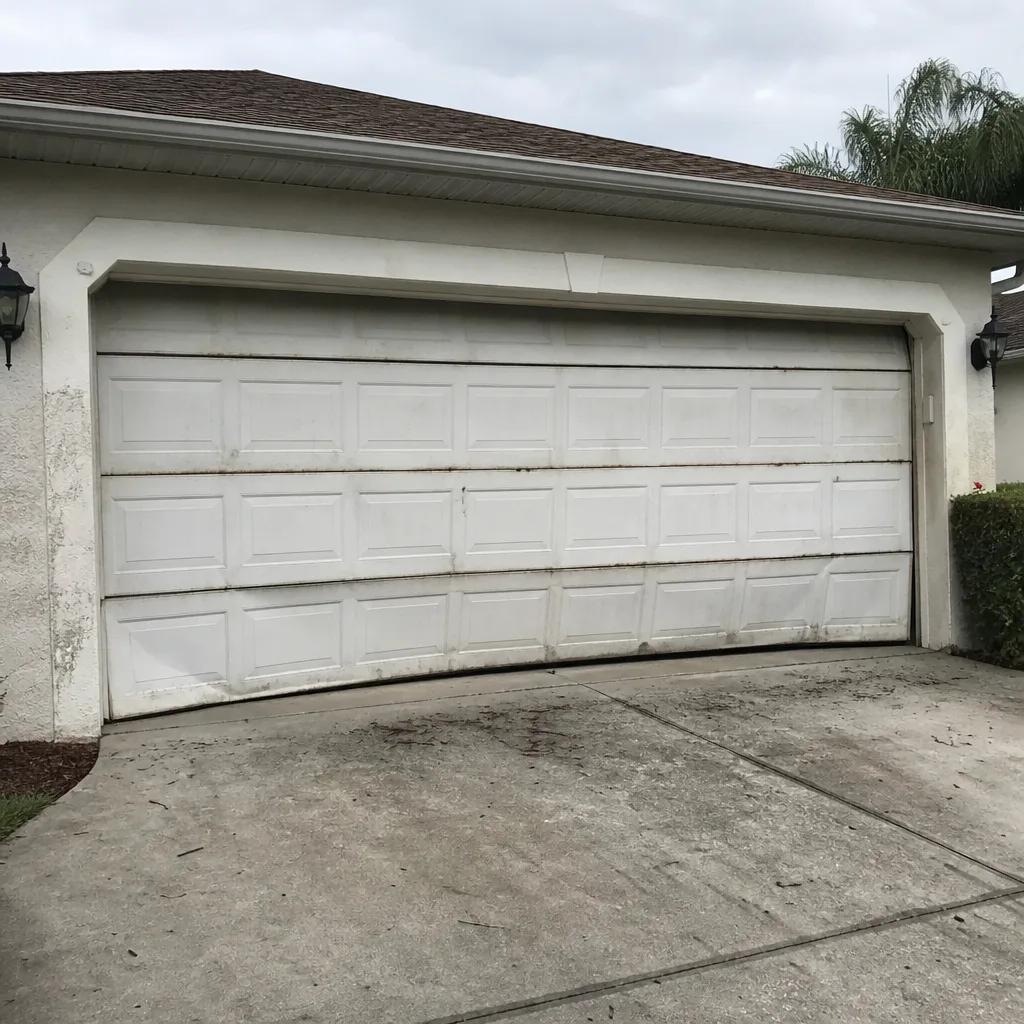 Before
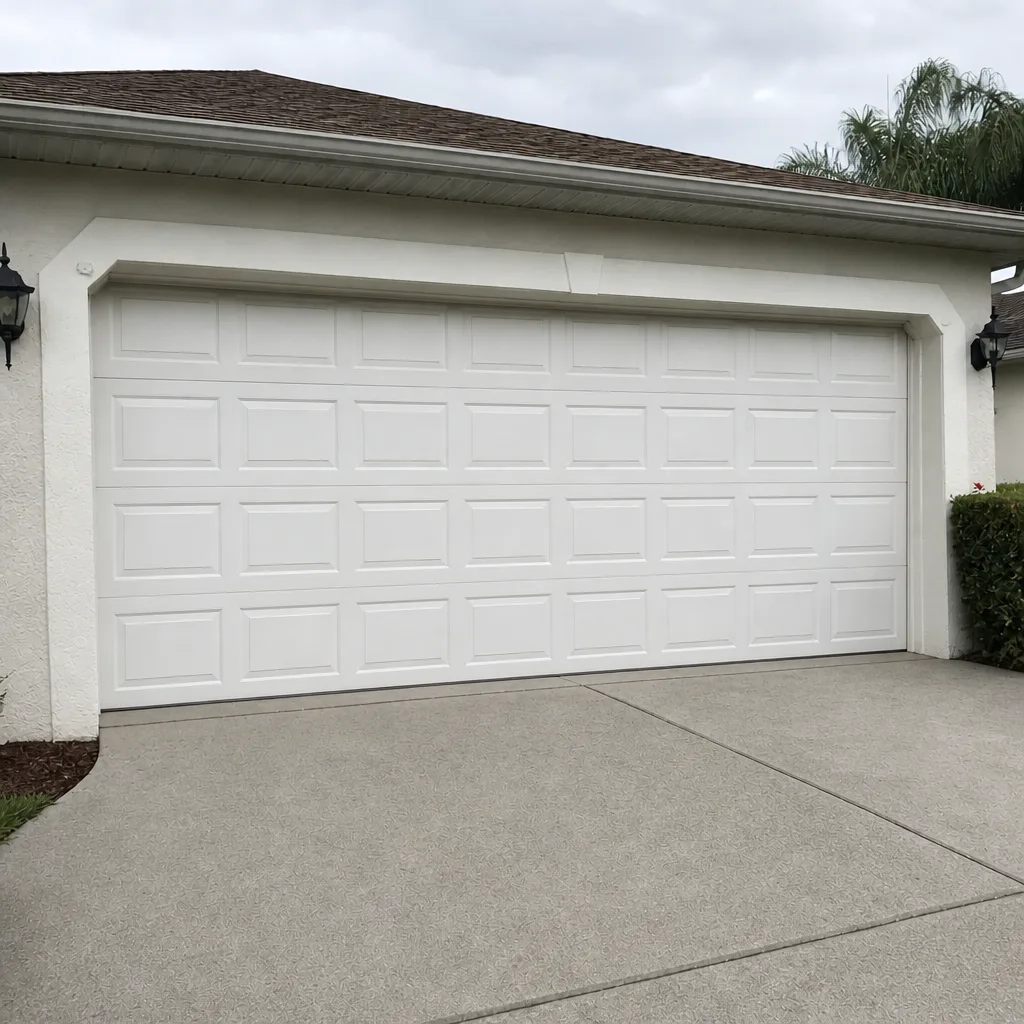 After
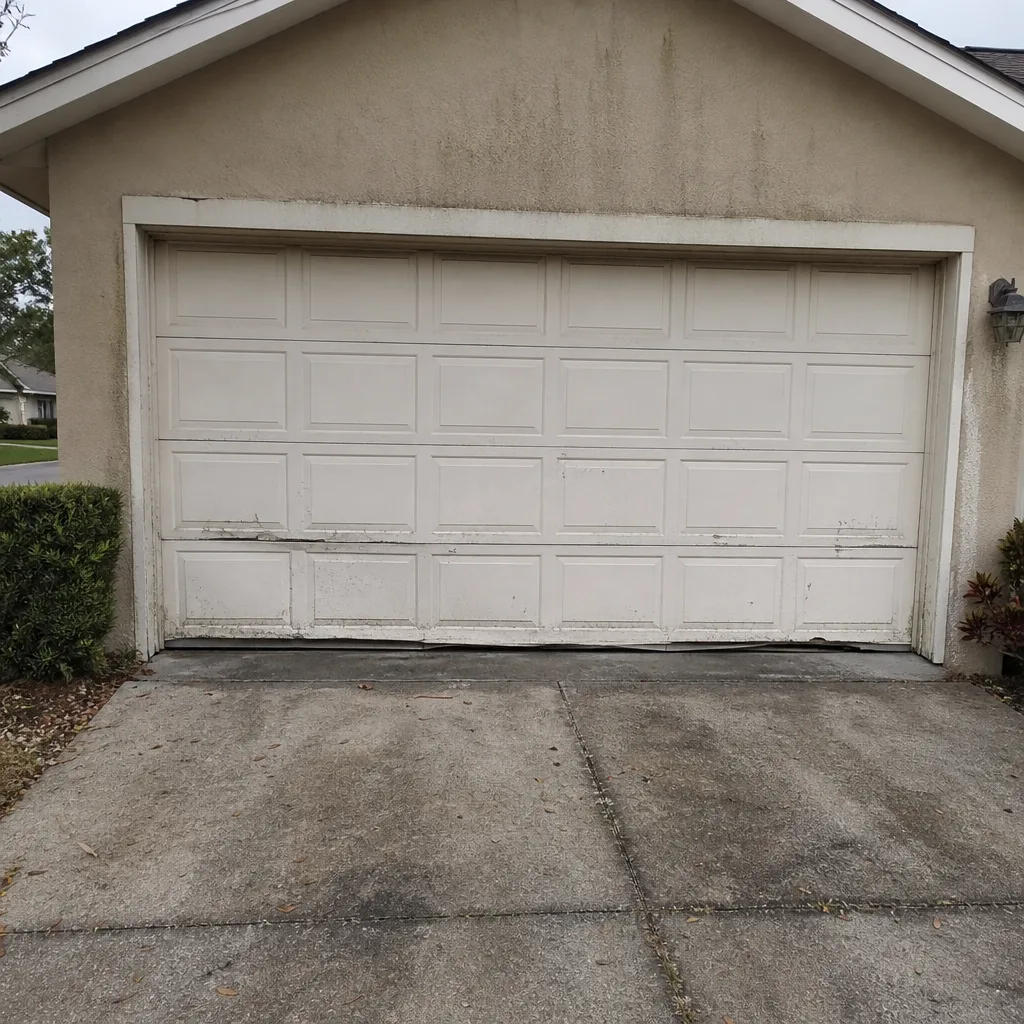 Before
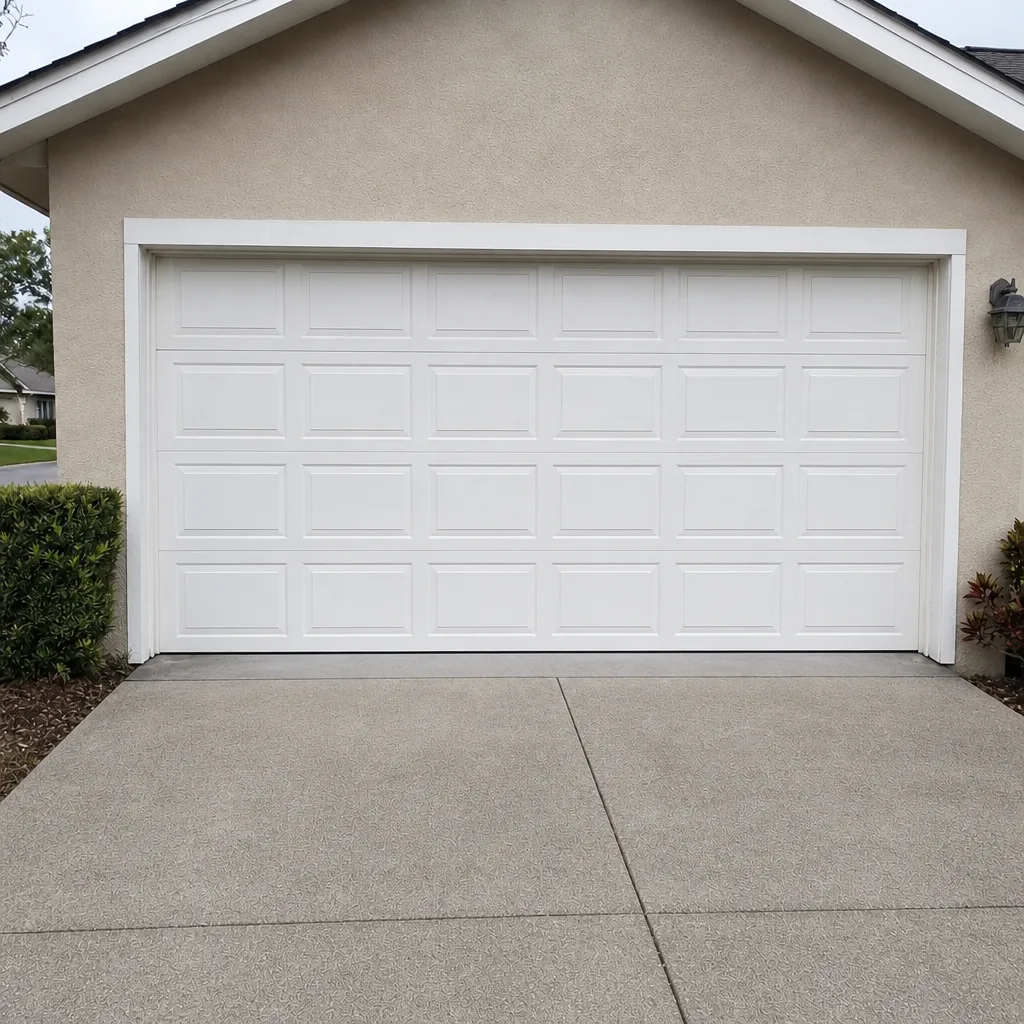 After
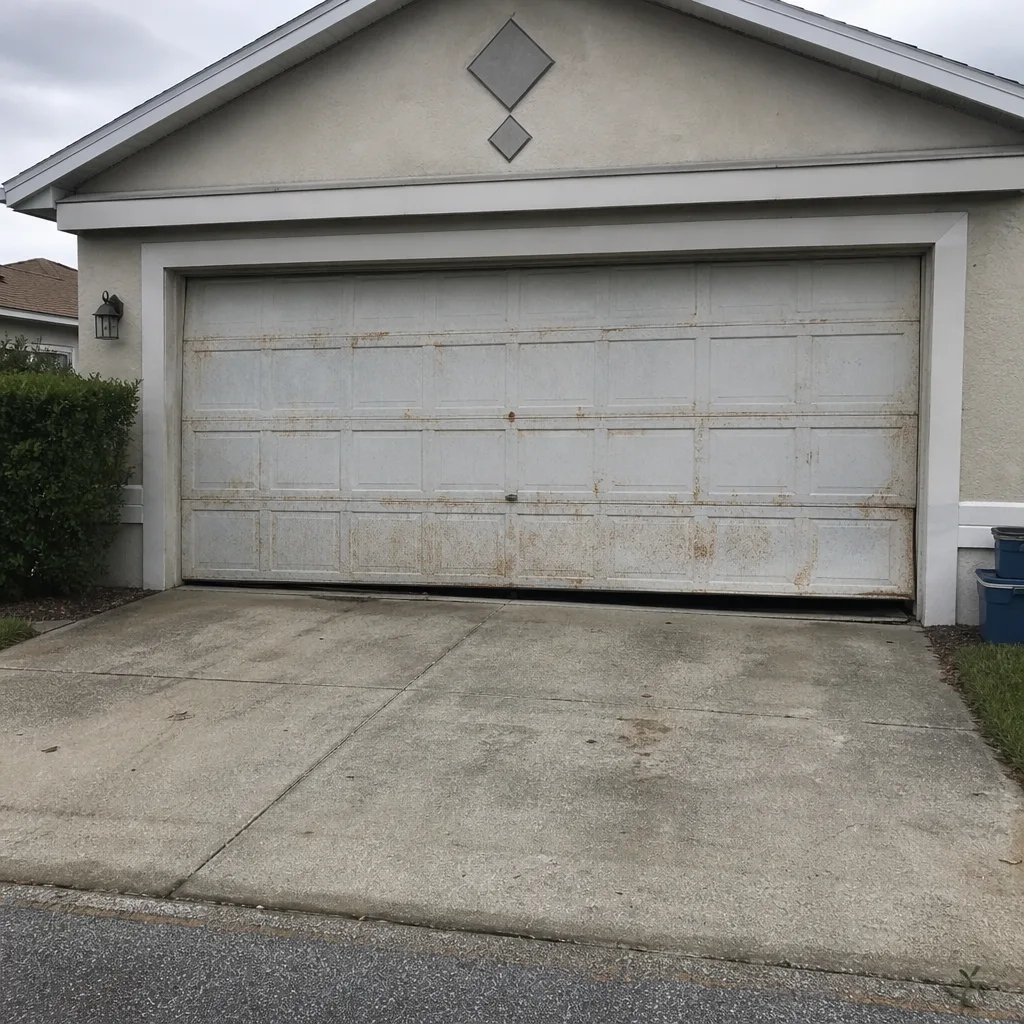 Before
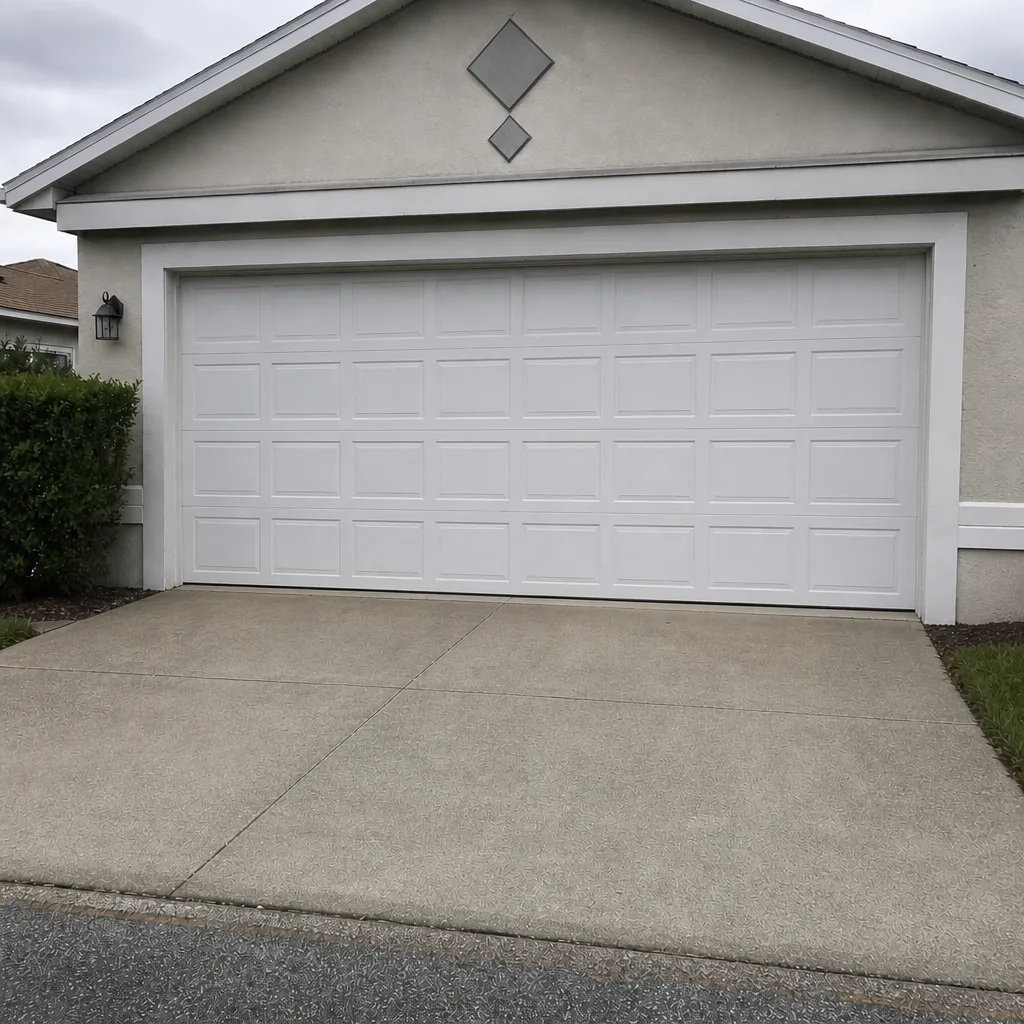 After
Common Mistakes to Avoid
- Running a popping door to “see if it does it again.” Every cycle puts additional stress on a spring that’s already declaring itself. If you hear a pop, stop running the door and call for a diagnosis. This is the single most expensive mistake we see in Lakewood Ranch.
- Assuming an uneven door means a bent track. Nine times out of ten, it’s a cable. Bent tracks are the rare case. Trying to force a misaligned track straight usually makes the door worse and adds a second problem to the original fix.
- Replacing a “bad” opener that’s actually heat-cycling. If your opener fails only in the afternoon, the motor is overheating because something is making it work too hard. Replace the strain, not the motor. A free estimate will tell you which.
- Ignoring the floor gap until the rainy season. A bottom seal with a visible daylight gap lets water, insects, and hot air in year-round. A replacement seal is one of the least expensive fixes on the door.
- Attempting a DIY torsion spring adjustment. Torsion springs are under thousands of pounds of stored tension. Even experienced technicians follow strict procedures. This isn’t a homeowner job, and the downside goes well beyond the door.
- Using a general handyman for a garage door job. Garage door diagnosis is a specialty. A generalist often replaces the visible part and misses the underlying cause – heat cycling, cable tension, or spring balancing. A single-trade specialist gets it right the first time.
- Skipping the balance test. Ten seconds of lifting a door halfway by hand tells you whether the springs are doing their job. Homeowners skip it because they don’t know to do it. Now you do.
When to Call a Professional
You should call a garage door professional when you spot any of the following: a spring with a visible gap or uneven coils, a loud pop or bang from above the door, a door that opens or closes unevenly, a frayed or dangling cable, an opener that trips in the heat, a door that’s come off its tracks, or a bottom seal leaving a visible gap that doesn’t adjust out. Run the walk-around checklist monthly and you’ll catch most of these before they become emergencies.
Lakewood Ranch Garage Door Repair offers free estimates in Lakewood Ranch – call (855) 337-2033. We work on all eight major brands – LiftMaster, Chamberlain, Genie, Clopay, Amarr, Wayne Dalton, Craftsman, and Raynor – so the technician who arrives already knows your system. Our technicians have up to 10 years of experience, and every service we offer is garage door only.
Frequently Asked Questions
A popping or banging sound from above the door, combined with a visible gap in the spring coil, is the most serious warning sign because it usually means a torsion spring is failing or has already broken. Stop running the door at that point and call for a free estimate. Continuing to cycle the door puts all the lifting load on the opener and can bring the door down.
Spring repair in Lakewood Ranch typically costs $180-$340 for a single torsion spring, and about twice that for a matched pair, which is almost always replaced together. The written estimate sets the final price before any work starts. Call (855) 337-2033 for an exact quote – estimates are free.
For emergency situations – a broken door with a car trapped, a door that won’t close, or a door off its tracks – we offer dedicated emergency garage door service so urgent problems get urgent action, not emergency scheduling. Call (855) 337-2033 and we’ll confirm timing and give you a written estimate before any work starts.
No. The price we quote before the work starts is the price you pay – there’s no change on inspection. If we discover additional issues once we’re on site, we show you what we found and quote again before touching anything else. You approve every step first. Call (855) 337-2033 for a free estimate.
Yes. Every technician we connect you with is licensed and insured as their state requires, and specializes in garage door work – not general handyman services. Our technicians have up to 10 years of experience. Call (855) 337-2033 for a free estimate.
An opener that only fails in the afternoon is almost always heat-cycling, not a dead motor. Florida’s summer heat builds up in the garage, and if the door is straining because of worn rollers, a slight misalignment, or weak spring tension, the motor hits its thermal cutout. It cools, then runs again. The fix is to relieve the load, not replace the opener. Call (855) 337-2033 and we’ll diagnose the whole door and opener together.
No. Torsion and extension springs store enormous energy under high tension, and releasing it incorrectly can cause serious injury. Do the visual inspection from the floor, then call a trained technician for the repair. Our garage door spring repair service is a dedicated specialty, handled by technicians trained specifically on torsion and extension systems.
A door with one or two worn components – springs, rollers, a seal – usually needs repair. A door with cracked panels, twisted tracks, or repeated spring failures after other repairs is a candidate for replacement. A free estimate walks through both options and lets you compare. For routine repair, start with garage door repair; if the door is beyond repair, we can discuss new installation alongside brand selection among Clopay, Amarr, Wayne Dalton, and Raynor.
The Bottom Line
Garage door problems rarely arrive without warning. A grinding noise points to rollers or tracks; a popping noise points to a spring or cable; an uneven door points to a cable, not a track; a heat-cycling opener points to strain, not a dead motor; and a floor gap points to a seal or a warped panel. The walk-around checklist catches almost all of them. The one rule that matters most: if you hear a pop or see a spring gap, stop running the door and call a specialist. In Lakewood Ranch, Lakewood Ranch Garage Door Repair handles every service on that list – spring, cable, roller, opener, and full door installation – and we give a written estimate before any work starts. Call (855) 337-2033 for a free estimate, and we’ll help you decide what’s normal wear and what needs fixing now.
For a broader look at everything we handle, start at Lakewood Ranch Garage Door Repair.
Written by the team at Lakewood Ranch Garage Door Repair.