Top Signs You Need Garage Door Service – Don’t Ignore These
A garage door that takes two seconds longer to close than it did six months ago isn’t “just getting older.” That speed change is the opener motor telling you the spring tension it’s been compensating for has dropped, and it’s a measurable, fixable problem. Most garage doors don’t fail without warning. They telegraph the failure for weeks through sound, speed, balance, and visible wear. The trick is knowing which signals mean “schedule a tune-up” and which mean “stop using the door today.” Here’s how to read them without turning every creak into a crisis. If you’d rather not crawl around the tracks yourself, call us at (855) 337-2033 and we’ll take a look.
Sounds That Matter vs. Sounds That Don’t
Garage doors are noisy machines by nature, and some noise is perfectly normal. The key distinction is whether a sound happens steadily during travel or spikes under load. That’s the difference between cosmetic and mechanical.
Usually cosmetic (keep an eye on it, no emergency):
- A low, steady rumble from the rollers. Metal rollers on steel tracks make noise. Clean, lubricated rollers are quieter, but a rumble alone isn’t a failure sign.
- Brush noise from the bottom weather seal dragging lightly on the floor. It’s a door that needs slight adjustment or a fresh seal, not a broken door.
- A soft hum from the opener motor during operation. That’s the motor working as designed.
Worth a professional look (load-related):
- Grinding that changes pitch as the door moves. This often points to worn rollers, a bent track section, or a bearing under load.
- Popping or snapping under tension. This is the sound of a spring, cable, or drum under tension doing something it shouldn’t. Stop the door and get it looked at.
- Stuttering or jerking mid-travel. A door that hesitates partway up or down is fighting its own weight, which traces back to spring tension or a track obstruction.
In our experience around Lakewood Ranch, most homeowners who call about a “weird noise” are describing the second list, not the first. The rumble they’ve lived with for years is fine. The pop that started last week is what we want to see.
The Balance Test: Two Minutes That Tell You a Lot
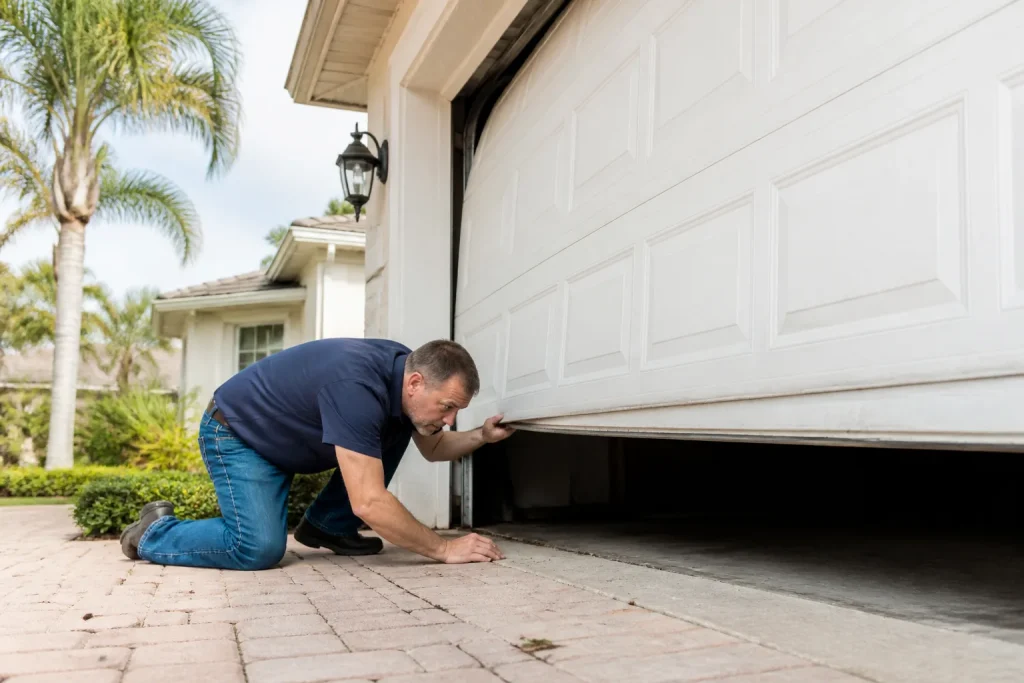
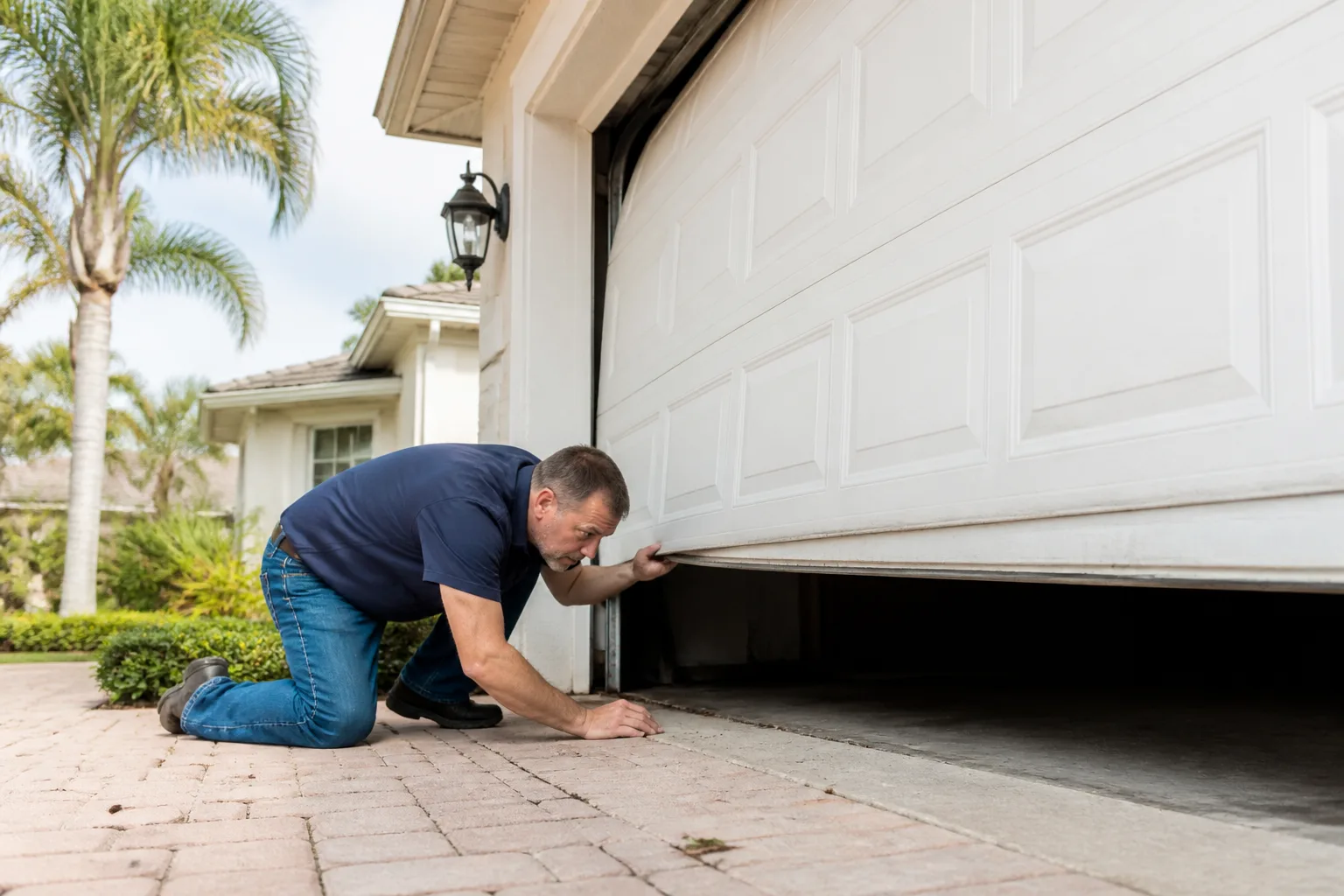
Before you do anything else, run the balance test. It’s the single most useful diagnostic a homeowner can perform, and it requires no tools. With the door fully closed, pull the manual release handle to disconnect the opener (it’s usually a red cord hanging from the trolley). Then lift the door by hand to about waist height and let go.
A properly balanced door holds its position, or drifts very slowly. It should feel light and even as you lift it, with roughly the same resistance from bottom to top.
A door with spring tension loss will do one of two things:
- Drop quickly toward the floor when released at waist height, meaning the springs aren’t holding enough counterbalance.
- Feel brutally heavy as you lift, which can mean a spring has snapped entirely or one side of a pair has failed.
A door that won’t hold at waist height is a door running on borrowed time. It’s also a serious safety matter: a door that drops under its own weight can injure someone standing underneath. Don’t prop it, don’t tie it, and don’t keep running the opener against that load. That’s the point where the local professionals we connect you with should take over. Spring repair is high-stakes work, and torsion and extension systems both need the right tools and training. Read more about our dedicated garage door spring repair approach if you suspect a spring issue.
The Five-Minute Visual Inspection
You can spot most serious wear in a five-minute walk-around, no disassembly needed. Do this in Lakewood Ranch a couple of times a year, and pay closer attention after any stretch of heavy humidity. Work top to bottom:
- Cables. Look at both cables running along the sides. Frayed cables show up as fishhooks, broken strands, or a flat spot where the wire should be round. Fraying means the cable is near the end of its life. Any frayed cable is a stop-using-the-door condition.
- Rollers. Check the rollers where they meet the track. Healthy nylon rollers look smooth and round. Worn ones are flat-spotted, cracked, or loose in their stems. Steel rollers develop flat spots and start rattling.
- Tracks. The vertical tracks should be plumb and the horizontal ones level, with a consistent gap where the roller rides. A visible bend, a gap that changes, or a track that’s pulling away from the wall is a call-to-us-now item.
- Bottom seal. Close the door and look at where it meets the floor. A good seal compresses evenly all the way across. Daylight underneath, gaps at one end, or a flattened, cracked seal means the seal needs replacing or the door needs adjusting. That’s also your first line of defense against Florida heat, rain, and the small things that wander in.
- Hardware and springs. Look at the springs above the door and the hinges along the sides. Light, even rust on a spring’s surface is often cosmetic, especially in high-humidity areas. But rust that’s flaking, pitted, or concentrated at the coils can weaken a spring over time. Corrosion on hinges, cables, and drums is worth a real inspection, not a coat of paint.
Florida humidity is hard on garage hardware. Corroded springs and seized hinges are a familiar pattern here in Lakewood Ranch, where the air stays sticky most of the year. Rust you can wipe off is different from rust that’s eating into the coil. When in doubt, have a specialist look.
When to Call a Pro: Three Urgency Tiers
Not everything is an emergency, and we’d rather you didn’t treat it like one. Sorting problems into tiers helps you decide what’s a nuisance and what’s genuinely unsafe.
Tier 1: Schedule within a couple of weeks. Cosmetic noise, a worn bottom seal (fix it sooner if you’re losing AC to the garage), noisy rollers, a slightly off-level door, and a dim opener light. These are maintenance items. None of them mean your door will fail tomorrow.
Tier 2: Book within days. A door that reverses before reaching the floor, a steady grind, an opener that strains or trips its breaker, a remote that works only close to the door, or one side of the door rising faster than the other. These point to a system problem that will get worse. Get it on the schedule before it becomes a Tier 3.
Tier 3: Don’t use the door until it’s fixed. A snapped spring, a frayed or slack cable, a door that’s off its tracks, a door that won’t stay up, or any door that drops fast when opened by hand. A broken garage door can trap a car or leave a home unsecured, so this is also where our garage door opener repair and urgent service come in. We treat these as emergency calls for a reason: the door is the largest moving object in most homes, and a Tier 3 door is a genuine hazard to anyone standing near it.
Emergency response, not emergency scheduling. If a door fails in Lakewood Ranch and the car is trapped or the house is open, we want to hear about it.
Opener Warning Signs Homeowners Miss
The opener is doing twice the work when the door’s balance is off, and it shows. A motor that’s been compensating for a weakening spring gets hot, struggles, and starts to fail. Watch for these signs:
- The door reverses on its own or won’t close all the way. This is often the safety sensors or a force-setting problem, but a door under extra load can trigger the safety reverse, too.
- The opener runs but the door barely moves, or moves with a lurch. The drive gear or the belt/chain may be worn, or the door is too heavy for the opener to lift.
- The opener grinds or squeals during operation. That’s a mechanical wear indicator, not normal.
- The remote’s range shrinks. A dying battery is common, but weak range can also indicate opener electronics at the end of their life.
If your opener is a Genie, LiftMaster, Chamberlain, or Craftsman unit, we arrive already familiar with that exact system. The same goes for Clopay, Amarr, Wayne Dalton, and Raynor doors. We work on the brand already in your garage rather than trying to sell you a new one.
Related services in Lakewood Ranch: if any of this sounds familiar, our garage door repair team handles the fix, and our Lakewood Ranch Garage Door Repair page covers everything we do. One call covers it: repair, opener work, springs, and new installation.
Our technicians have up to 10 years of experience with the common brands and the oddballs, and they’re trained on the high-tension work that most generalists avoid.
The Bottom Line
Most garage door failures announce themselves weeks ahead: a tempo change, a new grind, a door that won’t hold at waist height, a frayed cable you walked past for a month. The five-minute inspection and the balance test are the two habits that catch problems before they become emergency calls. Light rust is usually cosmetic in Lakewood Ranch’s humidity; flaking, pitted rust and seized hardware are worth a look. Grinding and popping under load mean stop and call. Rumble and brush noise mean keep an eye on it. Know your tiers, and you’ll never pay for a “tune-up” you didn’t need or skip one you did.
If you’re in Lakewood Ranch and need help, Lakewood Ranch Garage Door Repair offers free estimates. Call (855) 337-2033 and we’ll get your door back up and running today.
Frequently Asked Questions
The earliest signs are a change in the door’s speed or sound, a door that won’t hold at waist height when opened by hand, a frayed or slack cable, and a bottom seal that no longer touches the floor evenly. Any one of these is worth a look; two or more together mean schedule it soon. Call (855) 337-2033 for a free estimate.
Not always. A steady low rumble from the rollers and brush noise from the bottom seal are cosmetic. Grinding, popping under tension, or stuttering mid-travel are load-related and worth a professional look. When in doubt, run the balance test first. Call (855) 337-2033 if you’re unsure.
No. A snapped spring, a frayed cable, or a door that drops quickly by hand are stop-using conditions. The opener will fight the door’s weight, and the door can fall. Keep it closed and call (855) 337-2033 for emergency help.
Twice a year is a sensible baseline, and after any change in sound, speed, or balance. Florida humidity is hard on hinges, cables, and springs, so pay attention to pitting or flaking rust. Free estimates if you’d like a pro to take a look: (855) 337-2033.
Written by the team at Lakewood Ranch Garage Door Repair.
Need Garage Door Help?
Call Lakewood Ranch Garage Door Repair - the local pro we connect you with is licensed and insured, here with fast after-hours help in Lakewood Ranch.
(855) 337-2033