Last updated November 20, 2026
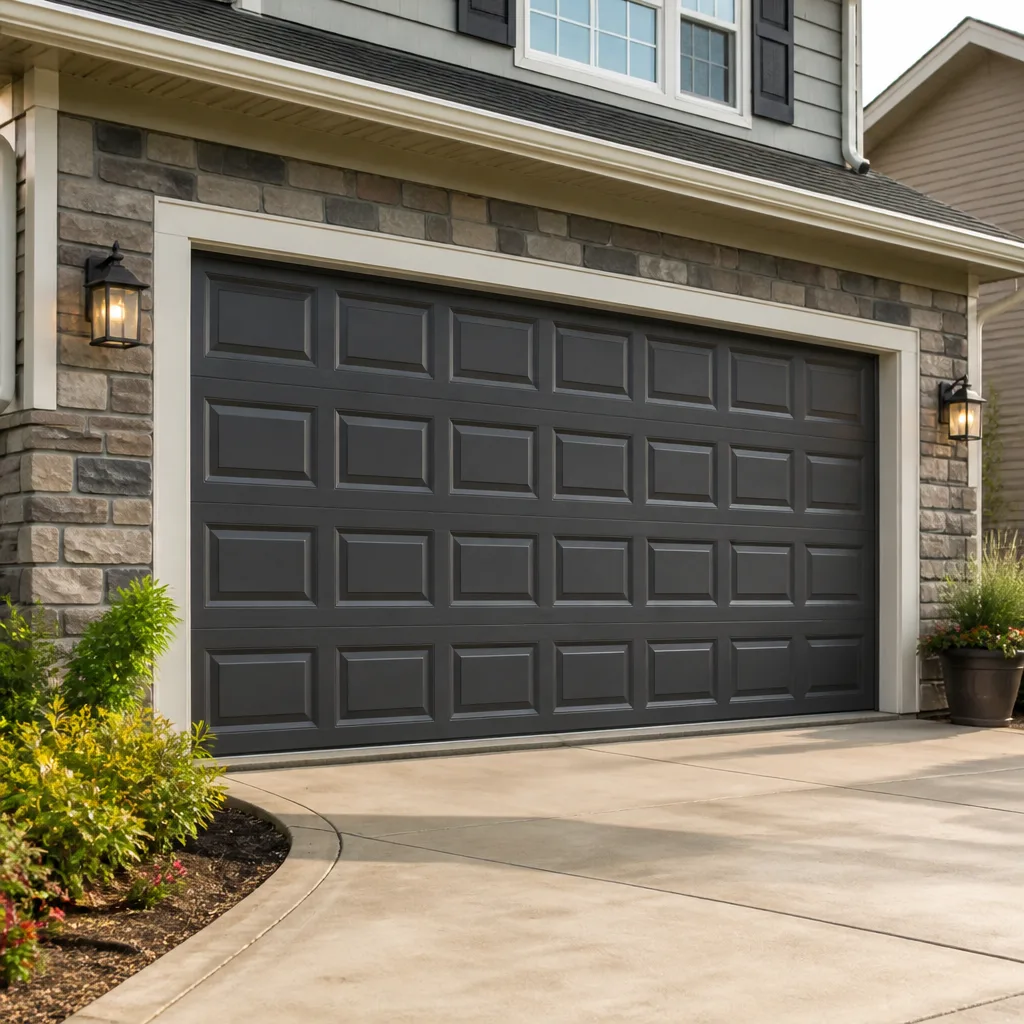 Raised-panel steel
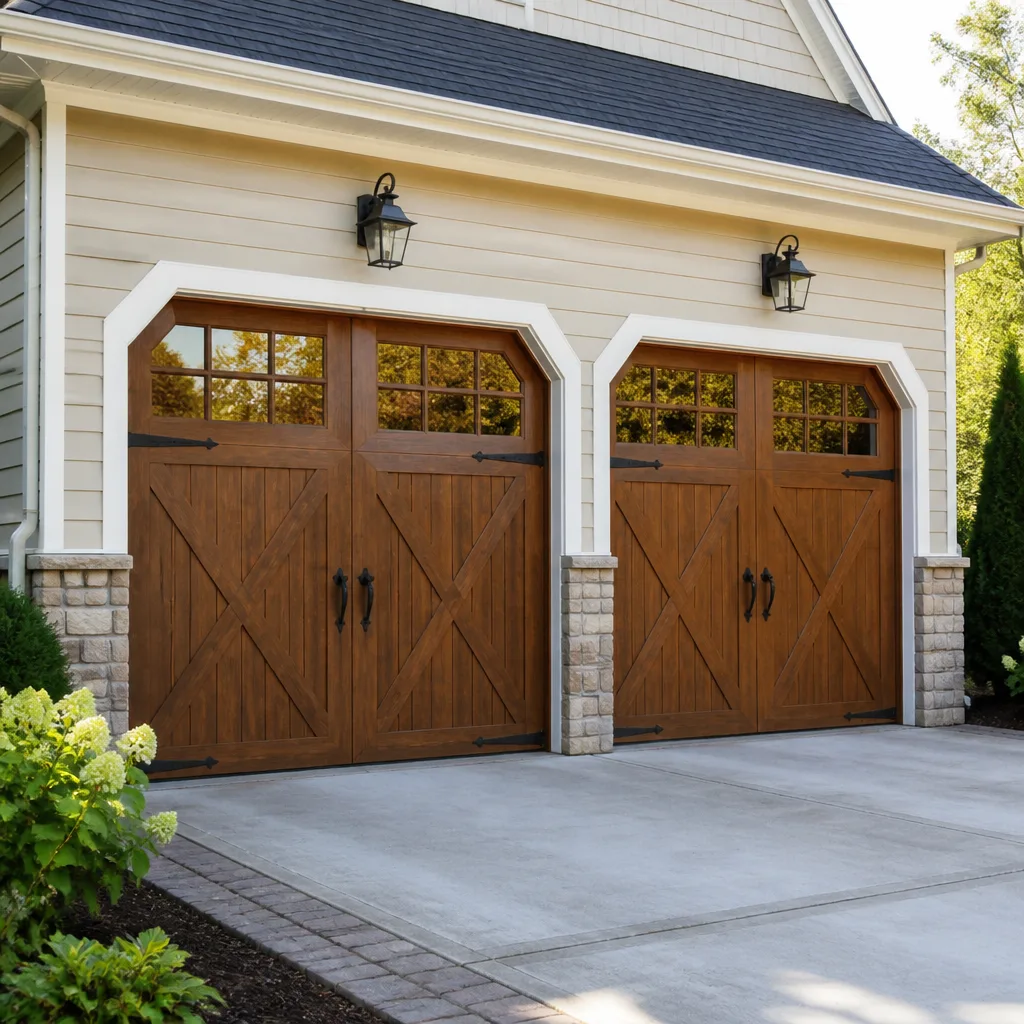 Carriage house
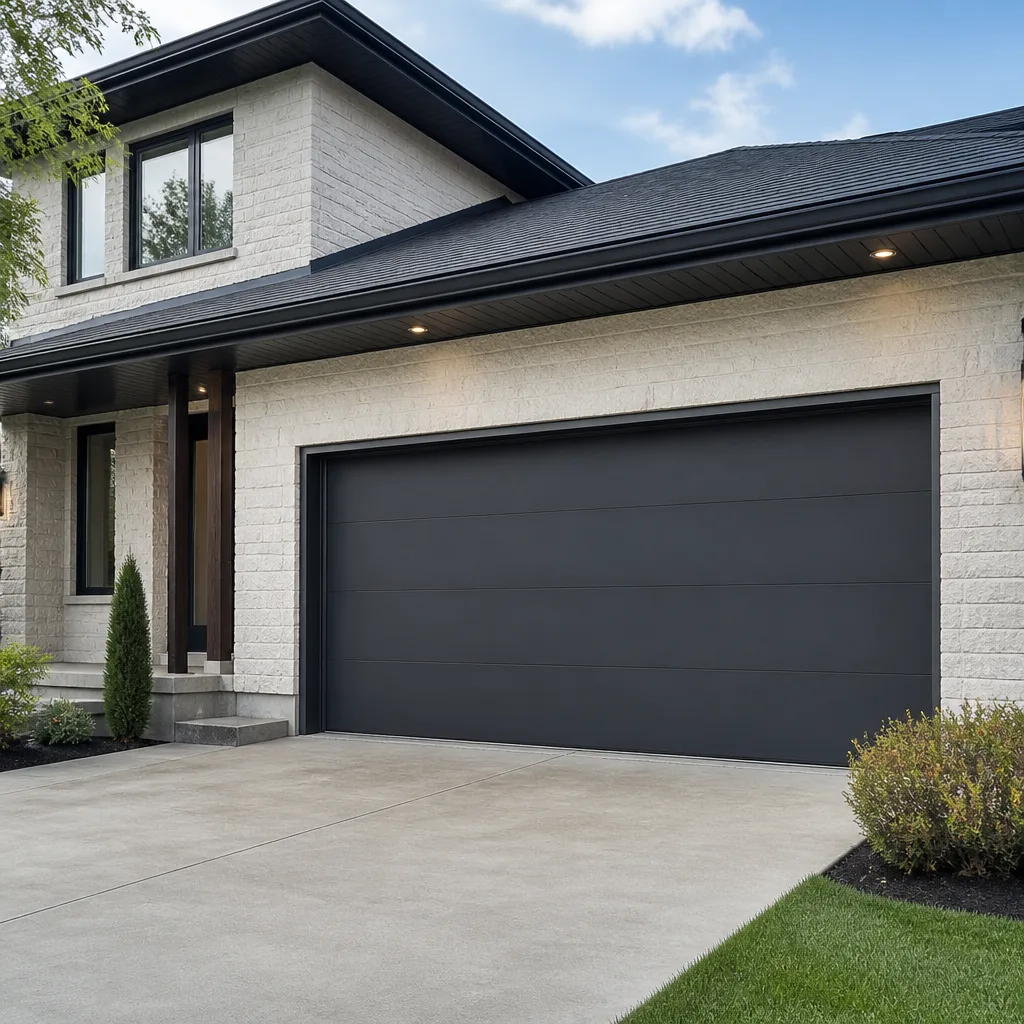 Modern flush
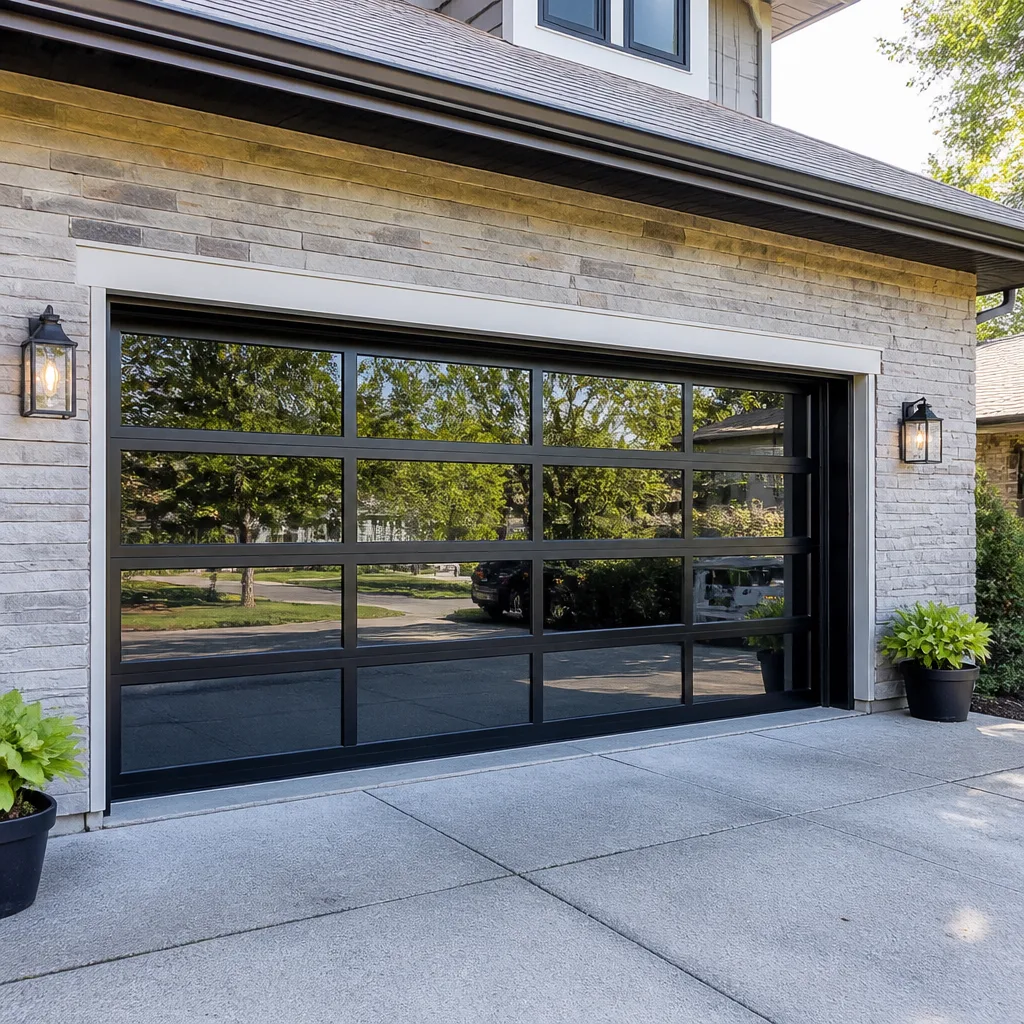 Full-view glass
 LiftMaster openers
 Chamberlain openers
Full 25-point door and opener safety check with every visit - springs, cables, rollers, tracks, and your LiftMaster or Chamberlain opener included
You get a price before we start. It does not change when the pro arrives.
Get your free estimateDIY vs Professional Garage Door: The Lakewood Ranch Homeowner’s Decision Guide
There’s no shortage of videos showing homeowners swapping out a torsion spring, and most of them end with the door working. The ones that don’t end that way end much worse. This isn’t a scare tactic. It’s a physics problem. A wound torsion spring holds the weight of the entire door in stored energy, and when it lets go at the wrong moment it releases that energy all at once, with nothing to stop it. So before you decide whether to grab your tools or pick up the phone, it helps to know which garage door jobs reward a careful homeowner and which ones punish a confident one. We’re going to walk through that task by task, with the costs and the risks laid out plainly, so you can make the call for your own home in Lakewood Ranch.
Quick Answer
You can safely handle the light jobs yourself: bottom seals, safety sensor alignment, opener remote programming, and minor track nudges. Anything involving torsion or extension springs, cables, and the door’s balance should go to a trained technician, because a spring failure can cause serious injury in a fraction of a second. For the gray-area jobs, weigh the real cost of a first attempt gone wrong rather than just the parts price.
Styles & brands we work with
- Raised-panel steel
- Carriage house
- Modern flush
- Full-view glass
- LiftMaster openers
- Chamberlain openers
Table of Contents
- Task-by-Task Breakdown: What You Can Do and What You Shouldn’t
- Why Torsion Springs Are Different From Almost Every Other Home Repair
- The Florida Heat Factor Nobody Talks About
- Cost Comparison: When DIY Actually Saves Money
- HOA Rules and DIY Installations in Lakewood Ranch
- Openers, Sensors, and the Jobs That Fall in the Middle
- Safety First: What to Check Before You Touch Anything
- Insulation, Weather Seals, and the Small Wins
Task-by-Task Breakdown: What You Can Do and What You Shouldn’t
The most useful thing we can give you is a clean line between the DIY-friendly jobs and the ones that belong in a technician’s hands. Most garage door problems fall neatly into one category or the other. The trick is being honest about which is which before you start, not after.
Jobs a homeowner can usually handle
- Replacing the bottom weather seal. The rubber strip at the bottom of the door wears out in the Florida sun and lets water and pests in. It slips into a channel and takes minutes to swap.
- Aligning or cleaning safety sensors. If the door won’t close, nine times out of ten a sensor is blocked or knocked out of line. A quick wipe and a small adjustment solve most sensor complaints.
- Programming remotes and keypads. Every opener brand uses a learn button and a pairing sequence. Follow the manual for your model and you’re done.
- Lubricating hinges, rollers, and tracks. A little garage-door-rated lubricant quiets a squeaky door and keeps rollers moving smoothly.
- Minor track realignment. A light bump with a rubber mallet can nudge a slightly bent track back into place, as long as the door is fully closed and you’re careful not to force it.
- Tightening loose hardware. Bolts and brackets loosen over years of cycling. Snugging them back down is a fair bit of preventive maintenance.
Jobs that belong to a technician
- Torsion spring replacement. The most dangerous repair on a garage door, full stop.
- Extension spring replacement. Less stored energy than torsion, but still under serious tension.
- Cable replacement. Cables are under tension and can whip if mishandled.
- Panel replacement and door installation. Panels are heavy, and alignment is unforgiving of small errors.
- Opener motor or gear replacement. Getting the motor apart and back together correctly takes experience with the specific model.
- A door that’s come off its tracks or is hanging crooked. A crooked door is a symptom of something bigger, and forcing it back usually makes it worse.
If you work through a problem and find you’ve crossed from one column into the other, that’s the moment to stop. We’ve seen plenty of jobs where a homeowner started on a sensor, ended up removing the cover plate, and called us with a door that no longer closes cleanly. It’s the same repair, just more expensive than it would have been.
Why Torsion Springs Are Different From Almost Every Other Home Repair
Most home repairs are forgiving. You hang a shelf crooked, you redo it. You cut a piece of trim short, you buy another. Torsion springs don’t work that way, and that’s the single biggest reason the DIY decision is different for garage doors than it is for almost anything else in your house.
A torsion spring is a coil of steel under tension that balances the entire weight of the door. When the door is closed, that spring is wound tight, holding enough stored energy to lift the door hundreds of times a day. The wind count matters, the anchor points matter, and the way the spring releases matters. If a spring lets go while you’re standing in front of it with your hands on the winding bars, the release happens faster than your reflexes, and the bar can swing around with enough force to break a wrist. That’s not a rare edge case. It’s the ordinary physics of the job.
Extension springs are a different system, but the risk profile is similar. They stretch along the sides of the door and store energy along their length. When one snaps, it can travel with real speed. This is why we treat spring repair as a specialty rather than a routine add-on, and why our technicians are trained specifically on both torsion and extension systems rather than picking up spring work as a general repair.
Compare that to, say, replacing a faucet cartridge or swapping a light fixture. Those are jobs where a mistake means a leak or a flicker, and you try again. Spring work is a job where a mistake means a hospital visit. That’s the line. If a repair can go wrong and cost you an afternoon, go ahead. If it can go wrong and cost you a finger, call garage door spring repair.
The Florida Heat Factor Nobody Talks About
There’s a piece of DIY risk specific to Lakewood Ranch that most national garage door guides never mention: the temperature inside your garage in July and August. A closed garage on a 90-something degree afternoon can easily run 10 to 15 degrees hotter than outside, and that heat changes how you work.
Heat fatigue is real. It slows your reaction time, dries your hands so tools slip, and makes you feel rushed to finish before you cook. On a task where a misjudged grip on a winding bar has serious consequences, that’s not a small factor. It’s the difference between the careful version of a job and the version you’ll regret. We schedule spring work in the cooler parts of the day for a reason, and it’s not about comfort.
The heat also affects the parts themselves. Rubber bottom seals harden and crack faster in a hot garage, and springs cycle under a bit more thermal stress than they would in a cooler climate. What that means for a Lakewood Ranch homeowner is simple: anything that involves touching a spring under tension, or any long job in an unventilated garage in the middle of summer, is the wrong time to be ambitious. If a repair can wait for a cooler morning, and it’s one you’re doing yourself, wait.
If a spring has already snapped, the cooler-morning advice doesn’t apply, because a broken spring leaves a door you can’t safely open. That’s a repair call, not a project. Our garage door repair team handles it, and on urgent calls we treat it as a repair that needs to be done right now rather than as something to put on a schedule.
Cost Comparison: When DIY Actually Saves Money
The honest answer is that DIY does save money on some jobs and costs more on others. The parts-vs-labor comparison only works if you compare like with like. Here’s how the math breaks down across the tasks most people ask about.
- Bottom seal replacement. DIY: the seal is inexpensive and takes under an hour. Professional: included in a larger repair visit or done affordably on its own. DIY wins here if you’re confident climbing a step ladder.
- Sensor alignment. DIY: free. This is a five-minute adjustment in most cases. No reason to call for it alone.
- Remote programming. DIY: free. Follow the manual for your opener, whether it’s LiftMaster, Chamberlain, Genie, or Craftsman, and you’re set.
- Lubrication and hardware tightening. DIY: a small bottle of door-rated lubricant does the job. Proactive and worth doing yourself.
- Minor track adjustment. DIY: possible, but this is the gray zone. A bent track usually means something else is off, and pushing it back without diagnosing the cause can damage the door.
- Torsion or extension spring replacement. DIY: the parts are not expensive, but you’re handling a wound spring with no training, no winding bars, and no margin for error. Professional: worth every dollar, and this is not a close call.
- Opener motor replacement. DIY: tempting, but a small wiring mistake can damage the new motor or the opener’s logic board. Professional: usually the smarter math once you factor in the cost of a second attempt.
The pattern is clear. DIY pays off when a mistake costs you an hour and a few dollars in parts. It costs you more when a mistake damages the door, the opener, or the garage structure, or when it takes you three attempts with two wrong parts. A broken spring that costs a technician’s time to repair correctly is still cheaper than a door panel bent by a first attempt, or a hospital bill from a spring that let go.
For a new-door decision, the math tilts even further toward a professional measurement. A new door has to be sized exactly to the opening, matched to the tracks, and specified to your HOA. If you want a sense of what a professional quote looks like, the Lakewood Ranch Garage Door Repair homepage lays out what a free estimate covers.
HOA Rules and DIY Installations in Lakewood Ranch
Lakewood Ranch is heavily planned, and many of its neighborhoods have architectural review requirements that apply to things you might not expect, including garage doors. If you install a new door yourself, or hire a contractor who doesn’t know the community rules, you can end up with a door that works perfectly but doesn’t satisfy the architectural committee. That’s a compliance problem no amount of DIY savings fixes.
What tends to matter to an architectural review:
- Door style. Panel design, window inserts, and carriage-style vs. raised-panel formats often need to fit the neighborhood’s architectural character.
- Color. The color palette is usually specified, and a door that reads as a slightly different shade than your neighbors’ can be flagged.
- Material. Wood-look steel and genuine wood can both be approved, but the door need to match the spec your community set.
- Insulation and window options. Windows are sometimes restricted in style or tint to keep the street consistent.
The practical point for a Lakewood Ranch homeowner is this: before you buy a door, get the architectural guidelines from your HOA and take them to whoever is doing the install, whether that’s you or a technician. Brand experience matters here too. When you’re choosing from a manufacturer like Clopay, Amarr, or Wayne Dalton, a technician who works with those lines regularly can steer you toward a model that meets a typical neighborhood spec instead of one that will trigger a review.
This is one place where a professional quote does more than check a door’s size. If you’re weighing a new door, our garage door opener repair team can also advise on pairing a new door with the opener you already own, which saves you the cost of replacing both at once.
Openers, Sensors, and the Jobs That Fall in the Middle
Openers are where DIY gets murky. Some opener problems are truly simple, and some look simple until you’re two steps in and the door still won’t move. Sorting them out before you start saves a lot of frustration.
Numbered tasks worth trying yourself
- Check the power and the breaker. A dead opener is often a tripped breaker or a switched-off outlet.
- Clean the safety sensors with a dry cloth. Dust and spiderwebs cause more “door won’t close” calls than anything else.
- Press the wall control and the remote to see if both work. If one works and the other doesn’t, the problem is a remote, not the opener.
- Look for a blinking light pattern on the opener housing. Every major brand, from LiftMaster and Chamberlain to Genie and Craftsman, uses blinking codes to tell you what’s wrong.
- Check that the manual release cord moves freely. If the door won’t disengage, you have a mechanical issue rather than an opener issue.
Tasks where you should call instead
- The opener runs but the door doesn’t move. Usually a stripped gear, a broken spring, or a snapped cable. Two of those three are dangerous to touch.
- The opener hums but nothing happens. A dead capacitor or a seized motor. Neither is a homeowner fix.
- The door reverses on its own after closing. Could be a sensor, could be a limit switch, could be a force sensitivity setting. Diagnosis matters.
- The motor turns on and off unexpectedly. That’s a logic board or a wiring issue that needs testing rather than guessing.
If you’re not sure which column you’re in, call. We work on the brand already in your garage, so the diagnosis is quick. And because our technicians stay focused on garage doors rather than spreading out across general handyman work, they arrive already familiar with the specific opener system at your house.
Safety First: What to Check Before You Touch Anything
Whether you’re taking on a small job or deciding to call, do a safety check first. The checks below are things to look at, not things to fix. If any of them turns up a problem, that’s the point where the job stops being a DIY project.
- Is the door in balance? Close the door and pull the release cord to disengage the opener. Lift the door by hand to about waist height. If it stays put or needs only a light push, it’s balanced. If it slams down or won’t lift, the spring tension is wrong, and that’s a job for a technician.
- Are the springs visibly worn? A gap in a torsion spring, or a spring with stretched-out loops visible in an extension system, means it’s at the end of its life. Don’t test it by winding. Call.
- Are the cables intact? Look for fraying or visibly slack cables on each side of the door. A damaged cable is dangerous and needs replacement before the door is used.
- Are rollers and hinges secure? Wobbly rollers and loose hinges are safe to snug up. A bracket that’s pulled out of the door panel is not.
- Is the bottom seal intact? A missing or torn seal is a small job and worth doing before water gets in.
One more safety note that applies to every garage door in Lakewood Ranch: keep the safety sensors low-mounted and clear. They should be about knee height and unobstructed, and on a hot summer afternoon they’re easy to block with a pool noodle, a bike, or a trash can. Test them once a month by passing something between them with the door closing. If the door keeps going instead of reversing, get the sensors looked at before you use the door again.
Insulation, Weather Seals, and the Small Wins
The smartest DIY work on a Lakewood Ranch garage door is usually the cheapest work. Insulation, weather seals, and small hardware upkeep don’t carry the physical risks of spring or cable work, and they pay off in a garage that’s cooler, quieter, and holds up better to the local climate.
- Insulation. If your garage gets brutally hot in the summer, adding or replacing door insulation is one of the most effective upgrades you can make. Foam-backed panels and insulated door retrofit kits are straightforward to install yourself.
- Bottom seal replacement. Rubber hardens quickly in Florida heat. Replacing it keeps rain out and reduces the rust that eats door hardware over the years.
- Side and top seals. These trim seals close the gap between the door and the frame. They’re inexpensive and easy to install, and they stop the drafts that make a garage stuffy.
- Hinge and roller lubrication. A light coat of door-rated lubricant twice a year keeps a door quiet and reduces the wear on the opener’s motor. It’s the cheapest preventive maintenance you can do.
None of this requires a technician. It does require being careful on a step ladder, and it requires stopping when you’re tired. If you’re working up on a ladder on a hot afternoon, the smart call is to finish the seal, wipe down your tools, and come back to the next item another day. The door will wait.
Common Mistakes to Avoid
- Winding a torsion spring without winding bars and training. A pair of pliers or a screwdriver in the winding cone is not a substitute for proper winding bars. The tool can slip, and the spring can unload in a way that causes broken bones and worse.
- Cutting a spring to “shorten” it. A homeowner occasionally tries to trim a spring to change its tension. That doesn’t work. It ruins the spring and leaves the door dangerously out of balance.
- Working a spring job in the middle of a hot afternoon. Heat slows your reactions and turns a careful grip into a loose one. If you’re doing any garage door work, do it in a cooler part of the day.
- Installing a door without checking the HOA spec first. A Lakewood Ranch community can flag a door that doesn’t match the approved palette or style. Even a perfect install can become a compliance problem.
- Forcing a crooked door back onto its track. A door that’s come off its track almost always has a bent track or a broken spring behind it. Pushing it back can damage the panel or pinch a cable.
- Over-tightening hardware on an aging door. Cracked hinges and split panels usually come from being too aggressive with the wrench. Snug it down, don’t crank it.
- Trying to repair a snapped cable. Cables are under tension and can whip if you don’t know how to release them safely. This is a call-a-technician job even for skilled homeowners.
See the difference
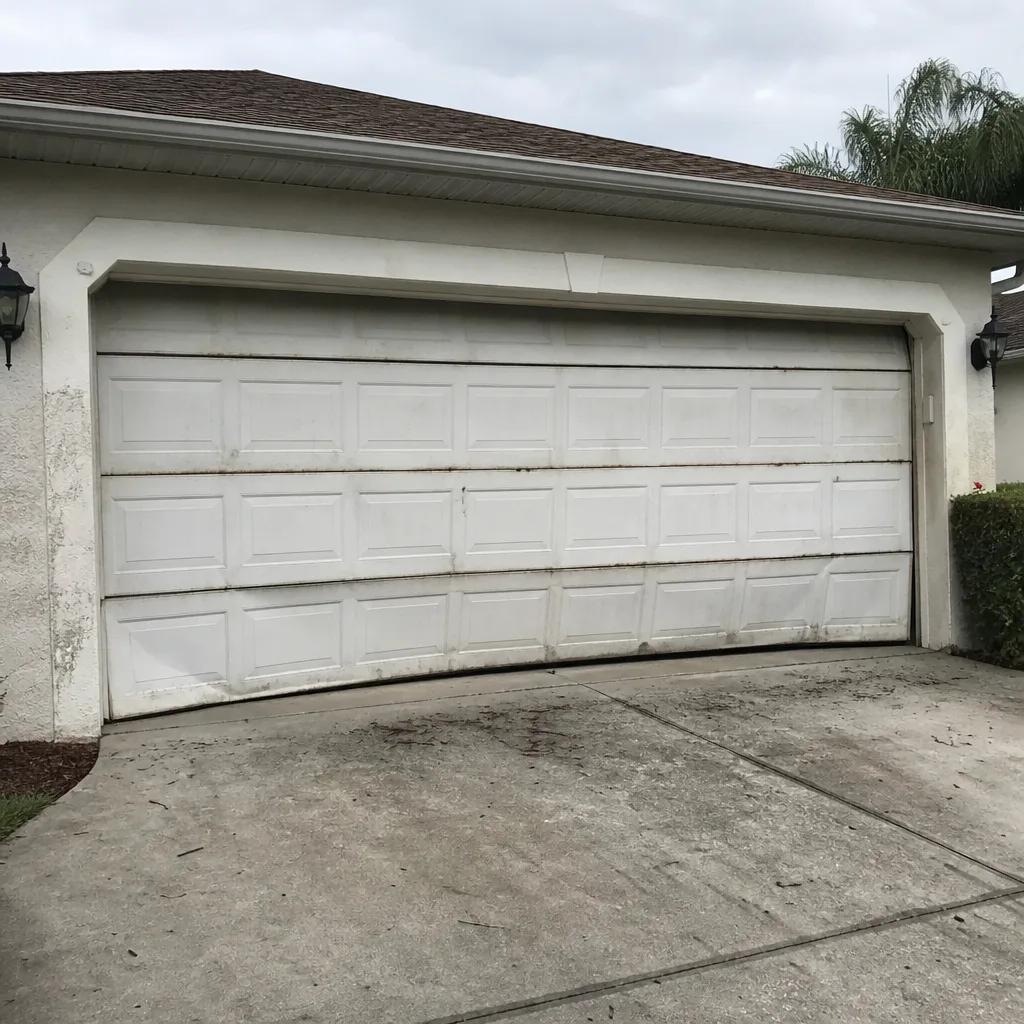 Before
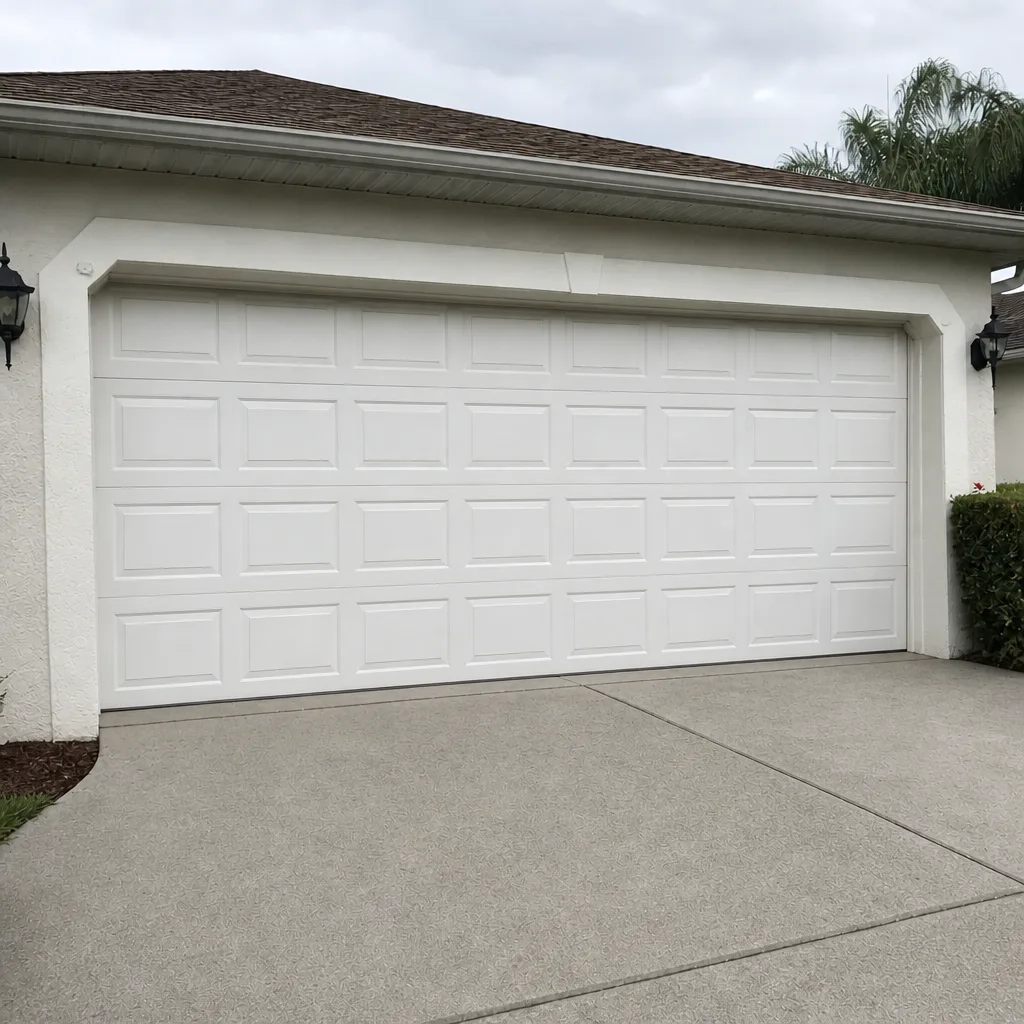 After
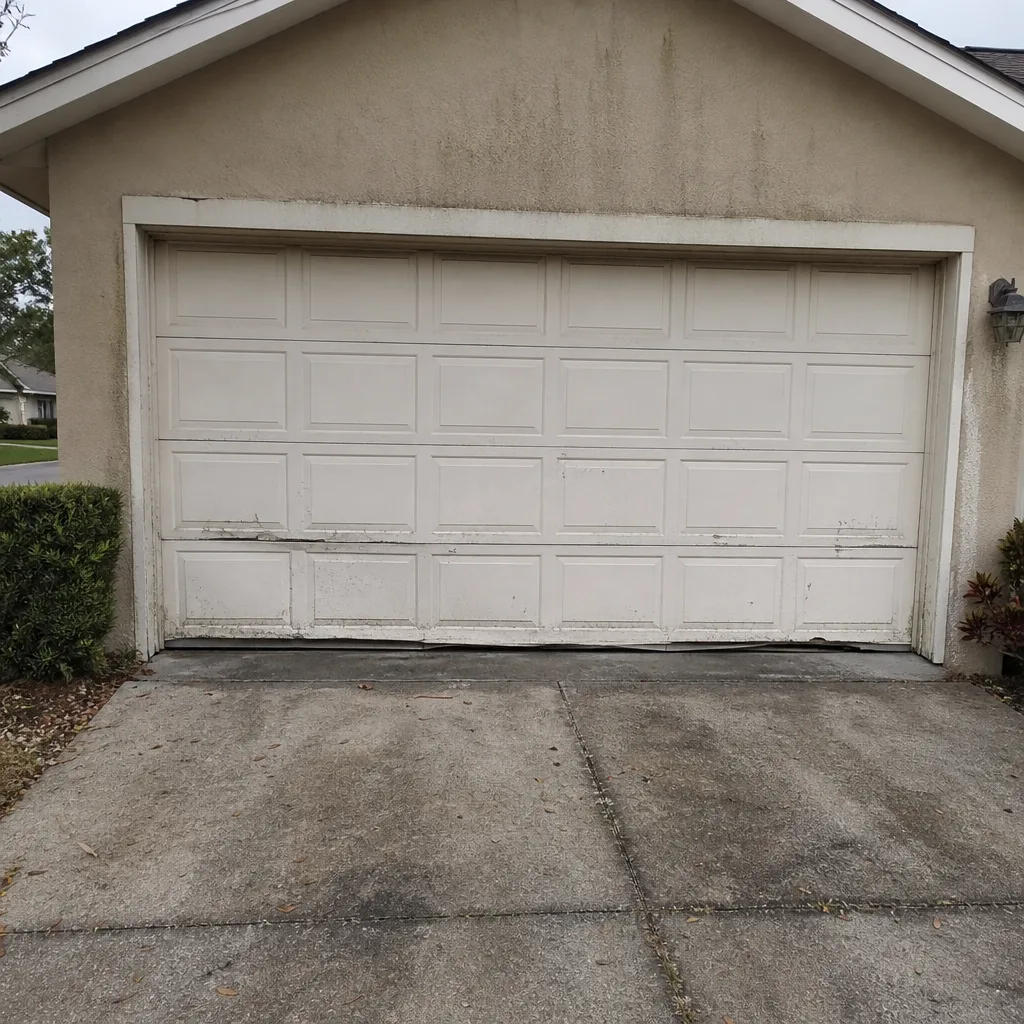 Before
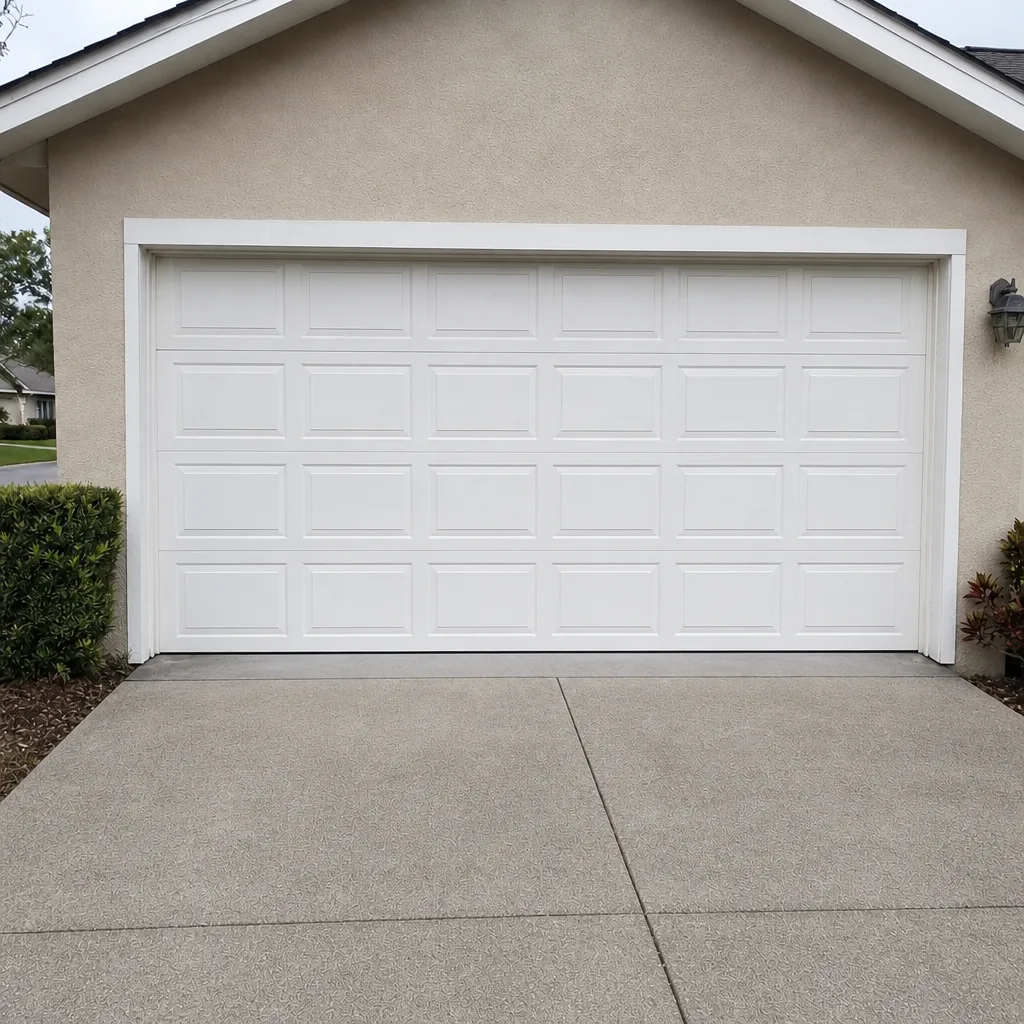 After
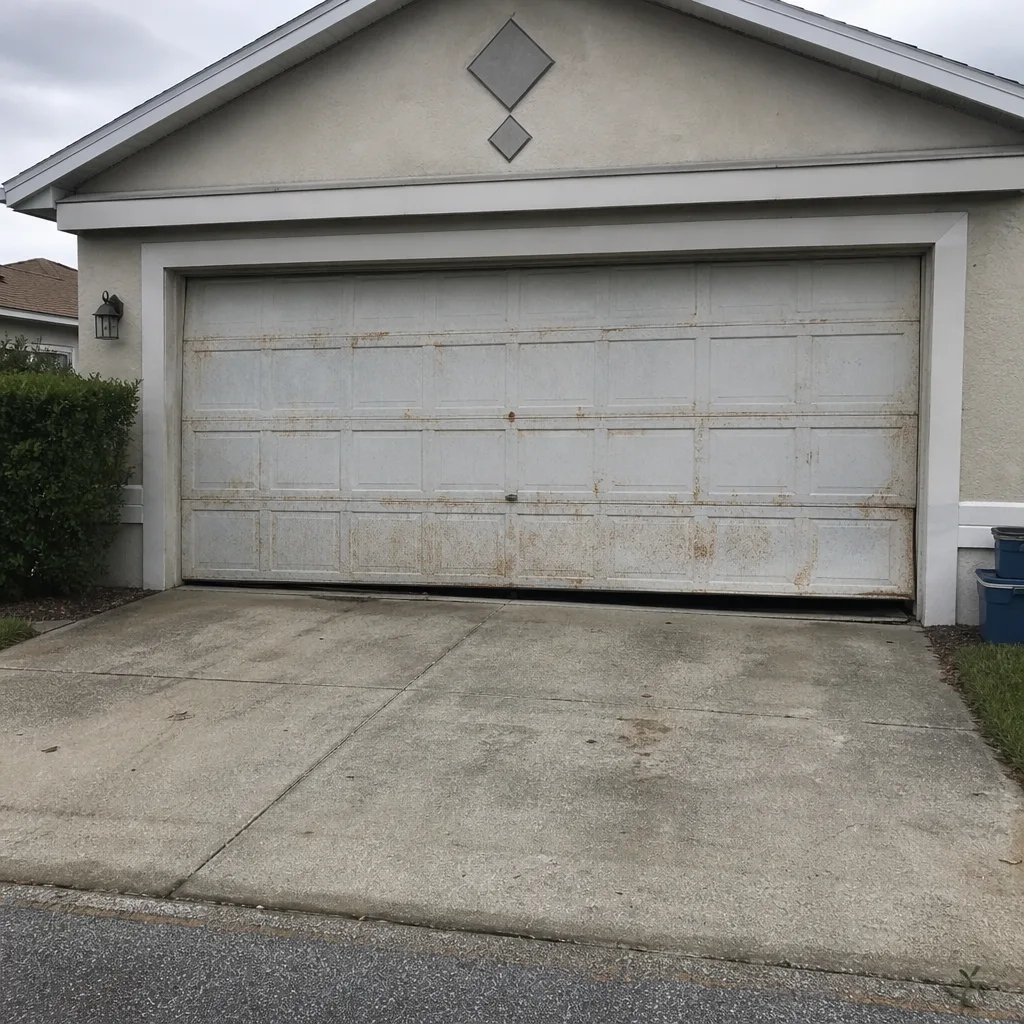 Before
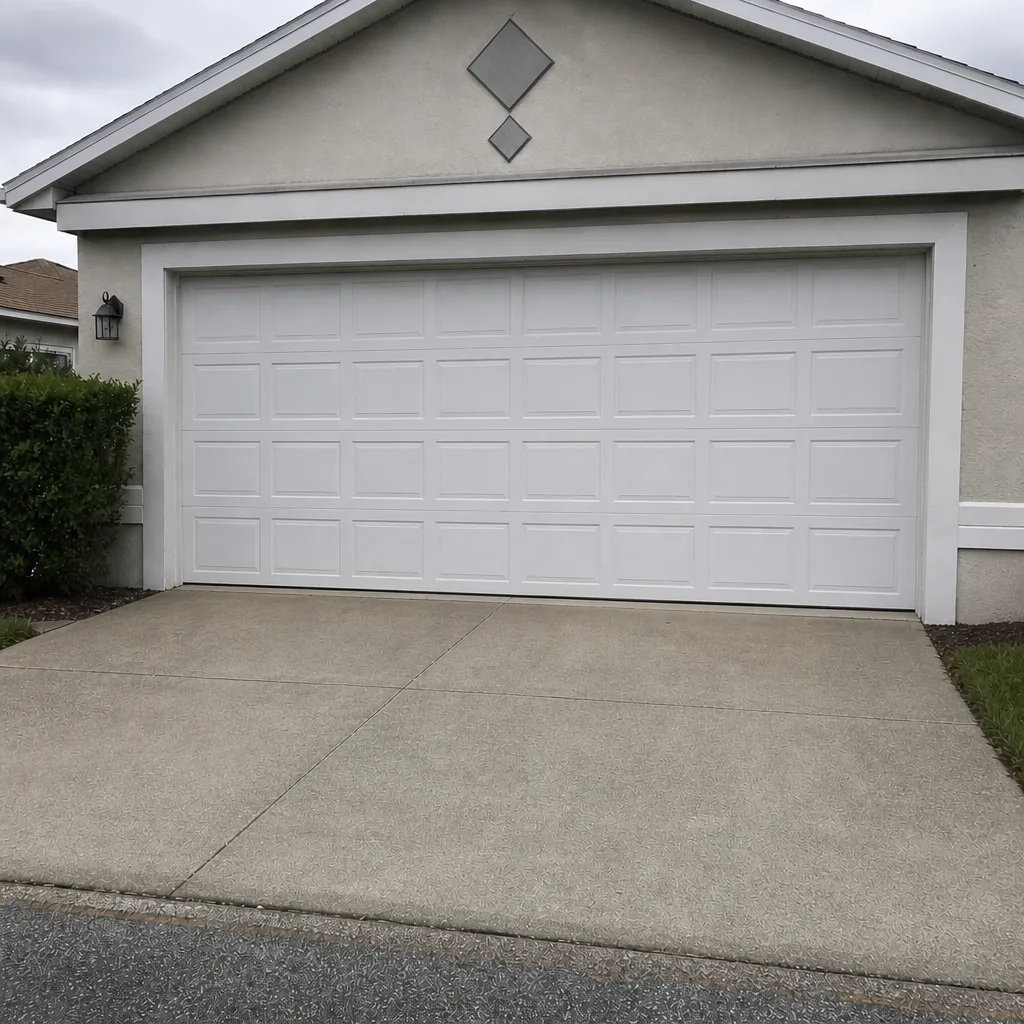 After
When to Call a Professional
Call a professional if a torsion or extension spring has snapped, if the door won’t open or close cleanly, if the door is off its tracks, if a cable is frayed or slack, or if the opener runs but the door doesn’t move. Those scenarios share a feature: the wrong first attempt makes the repair bigger. They’re also where a trained technician saves time, injury, and money by getting the diagnosis right the first time. If you’re on the fence, a free estimate is the fastest way to know which side of the DIY line your problem is on.
Lakewood Ranch Garage Door Repair offers free estimates in Lakewood Ranch. Call (855) 337-2033.
Frequently Asked Questions
We don’t recommend it, and this isn’t a close call. Torsion and extension springs hold enough stored energy to seriously injure you in a fraction of a second, and the mistake happens faster than you can react. Spring repair is a dangerous job even for experienced technicians, and it’s one that requires the right tools and specific training on the spring system in your door.
Spring repair is priced per job by written estimate, since the range depends on whether you have a torsion or extension system and whether one spring or a matched pair needs replacing. A matched pair is usually the right call, because both springs have cycled the same number of times and the second one follows the first. The price is quoted and agreed before any work starts. Call (855) 337-2033 for an exact quote, and estimates are free.
Bottom seal replacement, safety sensor alignment, remote and keypad programming, lubrication, and tightening loose hardware are all reasonable DIY jobs. Those tasks don’t put you in front of a spring or cable under tension, and a mistake costs you an hour, not an injury. Anything involving springs, cables, panels, or a door that’s off its tracks belongs with a technician.
Yes. Heat fatigue slows reaction time, makes your hands sweat, and makes it harder to grip tools firmly, and a closed Lakewood Ranch garage on a summer afternoon is significantly hotter than the outside air. On a job where a slip has serious consequences, that’s not a small factor. If you’re doing any garage door work yourself, do it in the cooler part of the day.
Many Lakewood Ranch communities have architectural review requirements for garage doors, including door style, color, panel design, and window options. Before you install a door yourself or hire a contractor, get your community’s guidelines and take them to whoever is doing the work. A door that meets the spec the first time avoids a compliance issue that no amount of saved money fixes.
We’re certified to service eight major brands: LiftMaster, Chamberlain, Genie, Clopay, Amarr, Wayne Dalton, Craftsman, and Raynor. If your opener or door is one of those, our technicians arrive familiar with the system rather than having to learn it on site. Call (855) 337-2033 and we’ll confirm your model before the visit.
The Bottom Line
The DIY vs. professional question on a garage door isn’t about whether you’re handy. It’s about whether a mistake is recoverable. Bottom seals, sensors, remote programming, and lubrication are recoverable. Springs, cables, and a door off its tracks are not, and the heat of a Lakewood Ranch summer makes those jobs more dangerous than a national guide will ever admit. Do the small jobs yourself when you’re comfortable, and call a specialist for the ones where the physics doesn’t give you a second chance. If your HOA has a rule about the door, check it before you buy. And when you’re ready for a straight answer on the repair, one call covers it.
Our technicians have up to 10 years of experience, and every service we offer is garage door only. When you need a repair, an opener fixed, a spring replaced, or a new door measured and installed, call Lakewood Ranch Garage Door Repair at (855) 337-2033 for a free estimate. Back up and running today starts with one phone call.
Written by the team at Lakewood Ranch Garage Door Repair.